

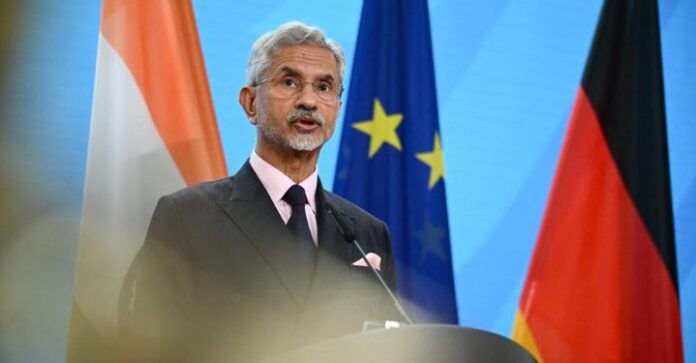

In a significant address at the Munich Security Conference 2025, India’s External Affairs Minister, Dr. S. Jaishankar, articulated India’s strategic approach to countering terrorism and its firm stance against nuclear coercion. His remarks were delivered in the aftermath of ‘Operation Sindoor,’ a targeted military response to the Pahalgam terror attack that resulted in the deaths of 26 civilians.
Operation Sindoor: A Tactical Retaliation
The Pahalgam terror attack, which occurred on April 22, 2025, was a coordinated assault on a civilian convoy in Jammu and Kashmir. In response, India initiated ‘Operation Sindoor,’ targeting nine terrorist camps in Pakistan and Pakistan-occupied Jammu and Kashmir (PoJK). The operation was described as “measured and precise,” aimed at neutralizing terrorist infrastructure responsible for cross-border attacks. Jaishankar emphasized that the operation was a legitimate exercise of India’s right to self-defense under international law.
Diplomatic Engagements: Strengthening Alliances
Following the operation, Jaishankar engaged in discussions with foreign ministers from Spain, France, Germany, Japan, and Qatar. These conversations focused on India’s approach to cross-border terrorism and garnered expressions of solidarity and support from the international community. Jaishankar highlighted the importance of a unified global stance against terrorism and emphasized that India’s response was both firm and measured.
Rejection of Nuclear Coercion: A Firm Stance
In his address, Jaishankar firmly rejected any form of nuclear blackmail, stating that India would never succumb to such tactics. He underscored that India’s commitment to national security and sovereignty was non-negotiable. The minister’s remarks were a direct response to concerns over the potential use of nuclear rhetoric in regional conflicts and served as a clear message to the international community about India’s stance on nuclear coercion.
Bilateral Approach to Pakistan: Maintaining Direct Dialogue
Jaishankar reiterated India’s policy of handling relations with Pakistan strictly on a bilateral basis, ruling out any form of third-party mediation. He emphasized that recent issues, including the Pahalgam attack, were resolved without external involvement, reaffirming India’s commitment to addressing concerns directly with Pakistan. The minister’s statements highlighted India’s preference for direct dialogue and its determination to address security challenges independently.
Commitment to Regional Stability: A Proactive Approach
Jaishankar’s address at the Munich Security Conference underscored India’s commitment to regional stability and its proactive approach to addressing security threats. By engaging with international partners and reaffirming its stance on terrorism and nuclear coercion, India aims to strengthen its position in global security discussions and promote a unified approach to combating terrorism.
Conclusion
In conclusion, Dr. S. Jaishankar’s address at the Munich Security Conference 2025 highlighted India’s strategic response to terrorism and its firm stance against nuclear coercion.