

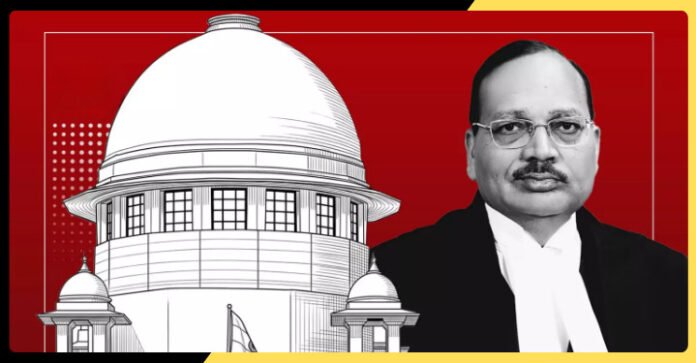

The Supreme Court of India has made a significant observation on the right to peaceful protest, stating that citizens cannot be subjected to a lathi-charge merely because they are participating in an agitation. Chief Justice of India Surya Kant, heading a bench comprising Justices Joymalya Bagchi and V. Mohana, said that the right to peaceful and lawful protest is constitutionally protected and that the mere existence of an agitation cannot justify excessive police action.
The observation came while the Supreme Court was considering a batch of petitions alleging excessive use of force against students during protests linked to examination irregularities and alleged paper leaks. The matter has gained considerable attention because the petitions relate to incidents involving student protesters at Jantar Mantar and other locations.
The court’s remarks underline an important democratic principle: citizens have the right to express disagreement with government policies and demand accountability, provided that their protest remains peaceful and lawful. The Supreme Court made it clear that an agitation, by itself, cannot become a reason for police authorities to use force.
The court also indicated that allegations of police excess must be independently examined. This is important because disputes over protests often involve conflicting claims. Protesters may allege that excessive force was used, while police authorities may argue that force was necessary to control a situation or maintain public order. An independent examination can help determine what actually happened and whether the police response was proportionate.
At the same time, the bench did not suggest that protesters have unlimited freedom to use violence or attack police personnel. The court also expressed concern over injuries suffered by police officers during demonstrations. It observed that injuries to students and police personnel are both matters of concern.
This balanced approach is significant. The Supreme Court has emphasised that democracy requires discipline from both sides. Protesters must follow the law and avoid violence, while police forces must exercise restraint and avoid disproportionate action.
The court also highlighted the need for uniform protocols for dealing with demonstrations across the country. At present, the handling of protests can vary significantly from one place to another. The court’s observations indicate that there may be a need for clear, consistent guidelines governing when and how police can use force.
The matter is scheduled to be heard further, with the petitions being considered together. The proceedings could potentially lead to wider directions on how authorities should respond to public demonstrations.
The Supreme Court’s remarks therefore carry significance beyond the specific Jantar Mantar incident. They reaffirm that peaceful dissent is a part of democracy and that public order cannot automatically be maintained through force. The key issue before the court will now be whether the police response in the cases under consideration crossed the line between legitimate crowd control and excessive use of force.