

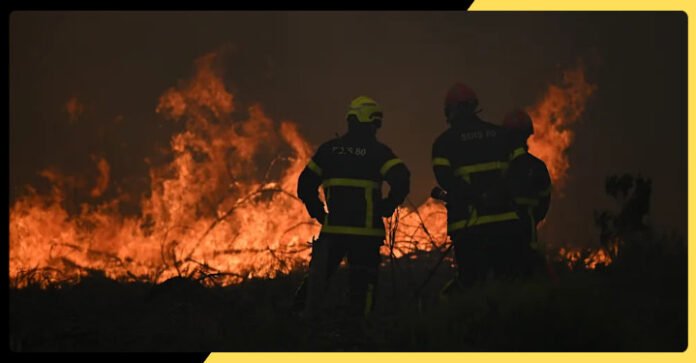

France is facing one of the most serious wildfire emergencies in its recent history as a massive blaze continues to spread across the southwest of the country. In the latest development, another 55,000 people were forced to evacuate their homes overnight as strong, gusty winds pushed flames rapidly through dry forests and communities near the city of Bordeaux. The new evacuations have taken the number of people forced from their homes in the main Gironde fire zone to around 220,000.
Authorities issued evacuation orders for several more localities, including communities located close to the approaches to Bordeaux. The situation has become increasingly dangerous because the fire is not behaving like a slow-moving forest blaze. Instead, extreme heat, dry vegetation and powerful winds are causing the flames to change direction and spread unpredictably. Firefighters have also faced the terrifying phenomenon known as fire whirlwinds, in which intense heat and rotating winds create powerful columns of flame and smoke.
These fire whirlwinds can be extremely dangerous because they may suddenly change direction and generate their own powerful winds. In a major wildfire, they can lift burning embers and carry them far ahead of the main fire front, creating new fires in areas that had appeared safe moments earlier.
The wildfire has been burning out of control since the middle of the week, and the scale of the disaster has continued to grow. France has deployed thousands of firefighters, aircraft and military support to battle the flames. The government has also mobilised additional soldiers and emergency resources to support evacuation operations and protect residents from smoke and fire.
The fire is burning through areas containing large stretches of dry pine forest and scrubland. These landscapes can act like fuel during periods of extreme heat and drought. France has already experienced a series of severe heatwaves this summer, with temperatures far above historical averages. Officials have warned that the combination of high temperatures, dry ground and strong winds is creating conditions in which wildfires can spread with extraordinary speed.
The crisis has also caused major disruption to roads, transport routes and local communities. Many residents have had to leave their homes with little warning, carrying only essential belongings. Evacuation centres have been opened to provide temporary shelter to people who cannot return home.
The wildfire emergency is also part of a wider crisis across southern Europe. Neighbouring Spain has faced its own devastating fires, with tens of thousands of people evacuated and at least one death reported in the latest wave of wildfires.
French authorities are now racing against time. A temporary improvement in weather conditions could help firefighters gain control, but officials remain concerned about renewed winds and rising temperatures. For residents living near the fire zones, the message remains clear: the situation is still dangerous, and evacuation orders must be taken seriously.
The disaster is once again raising questions about the future of wildfire management in Europe. As heatwaves become more intense and dry conditions last longer, fires that were once considered rare are becoming increasingly difficult to control.