

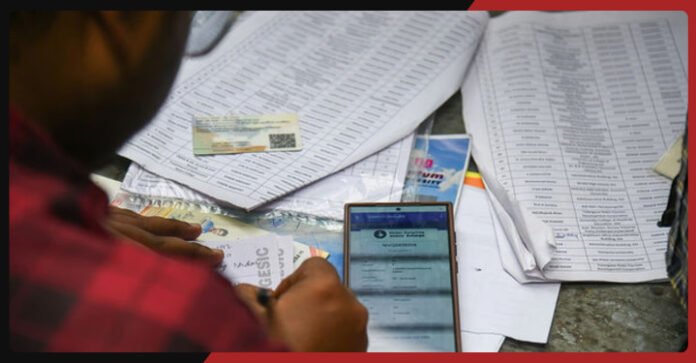

Muslims Overrepresented Among Voters Flagged in Delhi’s SIR Review
NEW DELHI: Questions have emerged over the fairness of Delhi’s Special Intensive Revision (SIR) of electoral rolls after a data analysis found that Muslim voters were disproportionately represented among electors flagged for “logical discrepancies” during the verification process. The findings have drawn attention to the way voter records are examined and the potential consequences for citizens whose information is selected for additional scrutiny.
According to an analysis of Delhi’s draft electoral rolls reported on October 14, Muslims accounted for approximately 13.6% of the electorate included in the draft list. However, they represented 20.3% of voters flagged for logical discrepancies by the Election Commission of India’s centralised ERONET software.
The difference between these figures has become a central point of concern. When a community represents a substantially larger share of the flagged population than its share of the electorate, questions naturally arise about whether the criteria used to identify discrepancies affect different groups equally.
The analysis also found a more pronounced disparity in five categories associated with family size and age relationships between relatives. Muslims accounted for approximately 30% of the 6.75 lakh electors flagged under these criteria, according to the published findings.
Delhi’s draft electoral roll contained approximately 97.54 lakh voters. Of these, around 33.12 lakh were flagged for notices under different categories. The flagged population included electors whose records could not be mapped to the previous intensive revision and those identified through software-based logical discrepancy checks.
These categories are important because they do not necessarily indicate the same problem. A missing match with an older electoral record may arise for different reasons from an inconsistency involving the ages of family members. Each category therefore requires careful examination before conclusions can be drawn about an individual voter’s eligibility.
The use of automated software has added another dimension to the debate. According to the report, ERONET identified records for further scrutiny, while Electoral Registration Officers remain the statutory authorities responsible for electoral rolls. This distinction raises questions about how software-generated flags are reviewed, explained and resolved by election officials.
A discrepancy in a database is not necessarily evidence that a person is ineligible to vote. Family records may contain outdated information, spelling variations, incomplete entries or other inconsistencies that require clarification. The challenge is to distinguish genuine errors from administrative problems without imposing unnecessary burdens on eligible voters.
The findings do not establish that every Muslim voter flagged by the system was treated unfairly. Nor do they demonstrate, on their own, that the Election Commission deliberately targeted a religious community. However, the disproportionate representation revealed by the analysis provides a reason to examine the system’s criteria, the data used to develop them and the outcomes of subsequent verification.
Transparency will be particularly important. Publishing the reasons behind automated flags, explaining how each criterion operates and providing anonymised information about the resolution of notices could help independent researchers assess whether the process is functioning consistently.
The Election Commission’s responsibility extends beyond identifying inaccurate entries. It must also ensure that eligible citizens retain a meaningful opportunity to participate in elections. Notices should be understandable, verification procedures accessible and appeals handled within reasonable timelines.
For voters, the immediate concern is whether their records remain accurate and whether any notice they receive can be resolved without excessive difficulty. For election administrators, the challenge is to maintain reliable rolls while avoiding unnecessary exclusion.
Delhi’s SIR findings have therefore placed an important question before election authorities: can a large-scale, technology-assisted verification exercise demonstrate that its rules are fair across communities? A transparent explanation of the reported disparities and a clear account of how affected voters are being assisted would be essential steps towards maintaining public confidence in the electoral process.