

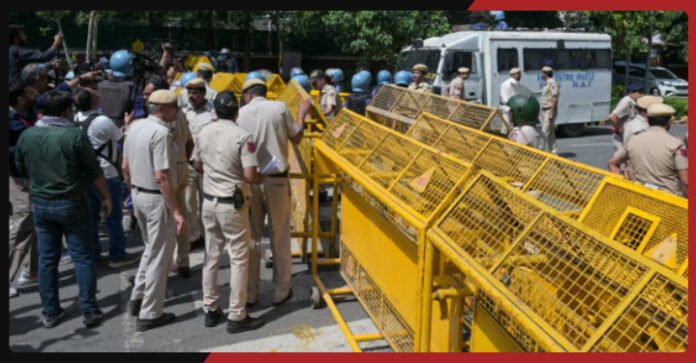

New Delhi, October 10, 2026: Political tensions intensified in the national capital as authorities prepared for a major demonstration against Chief Election Commissioner Gyanesh Kumar. YouTuber Dhruv Rathee was reportedly detained from his residence in Gurugram ahead of the planned protest, while several other demonstrators were taken away by police amid heightened security around Jantar Mantar.
The demonstration was organised by the Cockroach Janta Party (CJP), with support from activist and student groups, including the All India Students’ Association (AISA). The protesters planned to raise concerns about the Election Commission’s functioning and the Special Intensive Revision (SIR) of electoral rolls. They also called for accountability over alleged irregularities in the voter-list revision process.
According to media reports, Rathee was detained by police before the planned gathering. However, the precise legal grounds for his detention, whether formal charges were filed, and the complete circumstances surrounding the action were not immediately clear from the available reporting.
Why Were Protesters Planning to Gather?
The central issue behind the demonstration was the controversy surrounding the revision of electoral rolls. Opposition groups and activists have alleged that the process could lead to eligible voters being removed from electoral lists. They have demanded greater transparency, clear explanations for deletions, and safeguards to ensure that every eligible citizen retains the right to vote.
The Election Commission and the authorities’ explanations concerning the revision process remain central to the dispute. Allegations made by political groups should not be treated as established findings without supporting evidence.
By demanding the resignation of CEC Gyanesh Kumar, protesters sought to turn their concerns into a wider debate about electoral accountability and public confidence in democratic institutions.
Security Tightened Across the Capital
Delhi witnessed an extensive security operation ahead of the planned demonstration. Police and paramilitary personnel were deployed at important locations, while barricades and surveillance arrangements were introduced to regulate movement around central Delhi.
Authorities were particularly concerned about the possibility of large crowds assembling near Jantar Mantar and other sensitive locations. Police restrictions, transport changes and security checks were also reported in connection with the protest.
The measures affected more than the immediate demonstration area. Reports indicated that commuters and travellers faced disruptions because of metro restrictions, traffic diversions and changes to some train services. Residents were advised to check official transport updates before travelling.
Debate Over the Right to Protest
The detention of a prominent online commentator brought additional public attention to the unfolding events. Rathee has a substantial digital audience, and news involving him can quickly become part of a broader discussion about political expression, government accountability and the role of social media.
Supporters of the demonstration argue that peaceful protest is an important democratic mechanism through which citizens can question institutions and demand answers. They believe that restrictions should be proportionate and that authorities should clearly explain the reasons for detaining individuals.
From the police perspective, security restrictions may be imposed to prevent disorder and manage gatherings where permission has not been granted or prohibitory orders apply. The legality of any particular detention depends on the circumstances, applicable law and the grounds recorded by the authorities.
What Happens Next?
The key questions concern the circumstances of Rathee’s detention, the treatment and release of other protesters, and whether the demonstration can proceed without further confrontation. Official clarification about detention orders, charges, if any, and the applicable restrictions would help establish the facts.
The dispute also raises broader questions about transparency in electoral-roll revision and public access to information about voter registration. Addressing these concerns through verifiable data, clear procedures and accessible complaint mechanisms could help reduce mistrust.
As the situation develops, the distinction between verified events and competing political claims remains important. The detention reports and the protest itself mark another tense moment in the continuing debate over electoral processes, institutional accountability and the right to demonstrate in India.