

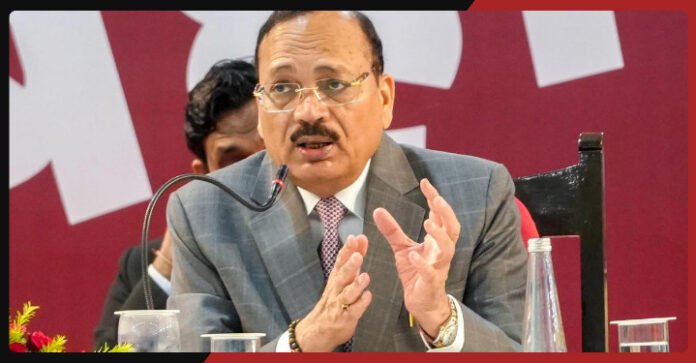

The reported decision of Chief Justice of India Surya Kant to decline a meeting with INDIA bloc leaders scheduled for October 12 has drawn attention to the relationship between the judiciary and political representatives in India. The development raises questions about the purpose of the proposed meeting, the reasons communicated for declining it, and the broader principles governing interactions between constitutional authorities and political leaders.
The Chief Justice of India occupies one of the most significant positions in the country’s judicial system. The Supreme Court is responsible for interpreting the Constitution, protecting fundamental rights, and resolving important legal disputes. Because its decisions can have far-reaching consequences for governments, political parties, and citizens, maintaining public confidence in the judiciary is essential.
The INDIA bloc is an alliance of opposition parties that has participated in national political discussions on issues ranging from democratic institutions to governance and electoral processes. A request from representatives of such an alliance to meet the head of the judiciary can attract considerable public attention, particularly when the request concerns an issue of national importance.
However, the significance of the reported refusal depends on the circumstances surrounding the request. The purpose of the proposed meeting, the identities of the participating leaders, and the official explanation for declining it are important details that require confirmation. Without those details, it would be premature to conclude that the decision represents a political disagreement or a wider institutional confrontation.
Meetings between political representatives and judicial authorities can raise questions about judicial independence. The judiciary must remain free from political pressure, and judges must be able to make decisions according to the Constitution and applicable law. At the same time, constitutional institutions operate within a broader democratic system in which public concerns about justice, accountability, and institutional functioning frequently arise.
The method through which concerns are presented is therefore important. Legal questions are generally addressed through established judicial procedures, while administrative concerns may be communicated through appropriate institutional channels. A meeting request does not automatically create an obligation for the Chief Justice to grant an audience.
The reported decision should consequently be assessed in light of the stated reasons rather than political assumptions. If an official explanation has been provided, its exact wording would help establish whether the refusal was connected to procedure, scheduling, institutional conventions, or another consideration.
The development also illustrates how quickly interactions involving senior constitutional officials can become subjects of political debate. Supporters of opposition parties may interpret a refusal through the lens of their concerns, while others may regard it as a routine exercise of institutional discretion. Neither interpretation should replace verified information.
For citizens, the central issue is whether constitutional institutions continue to function independently and transparently within their respective responsibilities. Public discussion is a normal part of democratic life, but conclusions about institutional motives require evidence.
As further details emerge, attention is likely to focus on the nature of the proposed meeting and the reasons communicated by the Chief Justice’s office. Until those details are independently established, the reported refusal remains a development that warrants careful, factual reporting rather than speculation.