

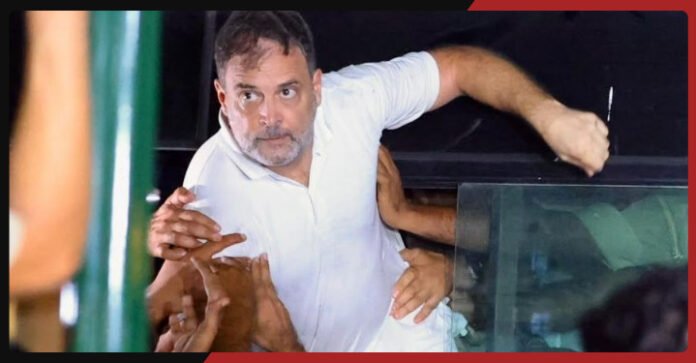

Congress leader and Leader of Opposition in the Lok Sabha Rahul Gandhi was detained by Delhi Police on October 6 after leading an opposition protest demanding the resignation of Chief Election Commissioner Gyanesh Kumar. The detention came after hours of demonstrations near the Election Commission of India headquarters in central Delhi, where opposition lawmakers sought a meeting with election officials over concerns surrounding the revision of electoral rolls.
The protest was led by opposition parties under the INDIA bloc and was focused primarily on the Special Intensive Revision (SIR) of electoral rolls. Opposition leaders have alleged that the revision process could result in legitimate voters being removed from electoral lists. They have also questioned the functioning and neutrality of the Election Commission under Kumar’s leadership. The Election Commission and the Bharatiya Janata Party, however, have rejected the allegations and maintained that the electoral-roll exercise is intended to identify duplicate, ineligible or otherwise incorrect entries while protecting the rights of eligible voters.
The demonstration began with opposition MPs attempting to march from Parliament towards the Election Commission’s headquarters. Police personnel had erected barricades to prevent the march from reaching the poll panel’s office. As the confrontation developed, several lawmakers were detained. Rahul Gandhi was among the prominent leaders who continued the protest, with visuals showing him standing on police barricades while holding the national flag.
The situation took another turn when Gandhi and Congress MP Priyanka Gandhi Vadra entered the premises of Akashvani Bhavan, located close to the Election Commission office. Instead of leaving after the initial police action, the two leaders and other opposition MPs staged a prolonged sit-in. They repeatedly demanded an opportunity to meet the Chief Election Commissioner and put their concerns directly before the poll panel.
Rahul Gandhi argued that opposition MPs had been elected by the people and therefore should be allowed to meet election commissioners and raise questions about the electoral process. He accused the Election Commission of failing to adequately address opposition concerns and said that the protest would continue until the leaders were given an opportunity to speak directly to the poll authorities. These claims represent Gandhi and the opposition’s political position and have not been independently established.
The Election Commission, meanwhile, said that it had received a request from the lawmakers later in the day but objected to the proposed meeting arrangements, saying that meetings with the Commission are normally conducted at its premises. The Commission also said it offered to have a senior official receive the opposition’s memorandum, but the lawmakers did not accept that arrangement.
The standoff eventually lasted for several hours before Delhi Police moved to clear the protest site. Rahul Gandhi, Priyanka Gandhi Vadra and several other opposition leaders were detained and taken away in police vehicles. They were later released, according to reports. Delhi Police said the detentions were carried out in accordance with law and in the interest of public safety and maintaining peace.
The incident has added another layer to the increasingly heated political dispute over electoral-roll revisions and the Election Commission’s role. For the opposition, the protest has become part of a wider campaign demanding greater transparency and accountability in the electoral process. For the government and the Election Commission, the allegations against the poll body remain unfounded, with officials defending the voter-list revision as an administrative exercise designed to improve electoral accuracy.
Rahul Gandhi’s detention is therefore likely to keep the dispute at the centre of political debate in the coming days. The confrontation between opposition parties and election authorities reflects growing tensions over electoral rolls, institutional independence and the broader question of public confidence in India’s democratic process.