

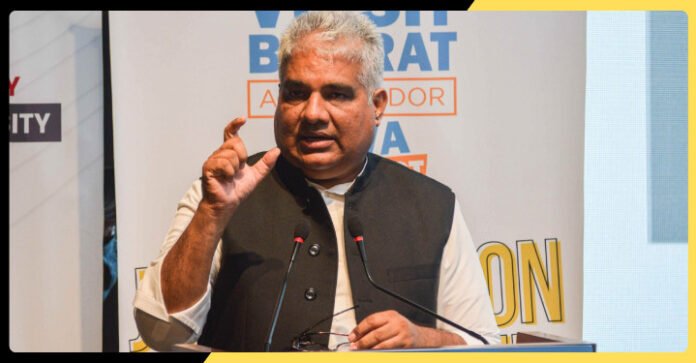

In a significant administrative development, the office of Union Minister Bhupender Yadav has undergone a major personnel reshuffle following the removal of his Private Secretary and two Additional Private Secretaries. The move has drawn attention within government circles, with officials viewing it as part of a broader effort to streamline administrative functioning and strengthen coordination within ministerial offices.
While the government has not publicly disclosed detailed reasons behind the changes, sources familiar with the matter indicate that the reshuffle is aimed at improving operational efficiency and ensuring smoother execution of official responsibilities. Such personnel changes are not uncommon in government ministries, where periodic reviews often lead to transfers, fresh appointments, or restructuring of ministerial staff.
The positions of Private Secretary and Additional Private Secretary play a crucial role in assisting Union Ministers with day-to-day administrative work. These officials manage appointments, coordinate with various government departments, oversee official correspondence, and help facilitate communication between the minister’s office and other ministries or agencies. Their role is considered central to maintaining an effective and organized ministerial secretariat.
According to officials, the recent changes are expected to pave the way for the appointment of new officers who will assume these responsibilities in the coming days. The selection process is likely to prioritize officers with extensive administrative experience and a strong understanding of government procedures. The new appointments are expected to ensure continuity in official work while supporting the minister in handling an extensive policy and administrative portfolio.
Bhupender Yadav, a senior leader in the Union government, holds key ministerial responsibilities and oversees matters requiring close coordination with multiple departments. Given the demanding nature of his responsibilities, the efficiency of his personal office is considered essential for timely decision-making and effective implementation of government policies.
Administrative experts note that reshuffles within ministerial offices are a routine feature of governance. Such changes may occur due to transfers, tenure completion, organizational restructuring, or evolving administrative priorities. They emphasize that personnel movements should not automatically be interpreted as signs of controversy unless officially confirmed.
Government departments periodically review staffing patterns to ensure that ministerial offices remain equipped to meet changing administrative requirements. Officials serving in sensitive positions often rotate across ministries to gain broader experience while supporting different areas of governance. This practice also promotes institutional continuity and strengthens administrative capacity across departments.
Political observers believe that efficient coordination within ministerial offices has become increasingly important as ministries handle complex policy initiatives and inter-departmental projects. Well-functioning support teams help ministers process official files promptly, coordinate meetings, monitor project implementation, and respond to public and parliamentary matters efficiently.
The latest reshuffle has generated interest among bureaucratic circles, particularly because it involves multiple senior support staff members at the same time. However, officials have maintained that government work continues uninterrupted and that administrative processes remain fully functional during the transition period.
As new appointments are finalized, attention will shift toward how the reorganized ministerial office adapts to its responsibilities. Incoming officials will be expected to ensure seamless coordination, maintain administrative efficiency, and support the minister in executing his official duties effectively.
The development also highlights the government’s ongoing focus on administrative efficiency and institutional accountability. Regular reviews of staffing arrangements are considered an essential component of effective governance, helping ministries respond to evolving priorities while maintaining continuity in public administration.
For now, the government has not issued any detailed statement regarding the reasons behind the personnel changes. Further clarity is expected once official appointment orders for the replacement officers are released. Until then, the reshuffle remains an important administrative development that underscores the dynamic nature of staffing within the Union government’s ministerial framework.