

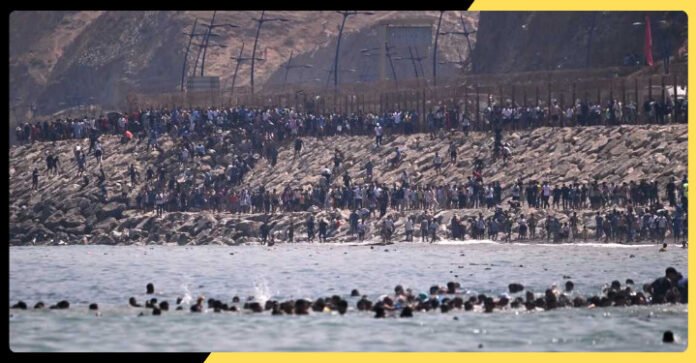

The deaths of at least 18 migrants during an attempt to cross from Morocco into the Spanish enclave of Ceuta marked one of the most tragic episodes in the ongoing migration crisis affecting Europe. The incident drew global attention to the dangers faced by people seeking a better life and reignited debates over border security, migration policy, and human rights. Although similar attempts have occurred in the past, the scale of casualties highlighted the growing desperation among migrants and the increasing pressure on authorities responsible for protecting Europe’s external borders.
The incident unfolded when a large group of migrants gathered near the fortified border separating Morocco from the Spanish territory of Ceuta. Many of those involved had spent months, and in some cases years, traveling across Africa in the hope of eventually reaching Europe. Their journey often included crossing deserts, surviving criminal gangs, and enduring harsh living conditions before arriving near the border.
According to official reports, hundreds of migrants attempted to scale the high metal fences that divide Morocco from Ceuta. Some carried makeshift ladders, while others tried to climb the barriers using ropes or by supporting one another. The fences, equipped with surveillance systems and security patrols, have long been a symbol of Europe’s efforts to control irregular migration.
As the crowd pushed toward the border, clashes reportedly broke out between migrants and Moroccan security forces. Authorities used crowd-control measures in an attempt to stop the crossing, leading to scenes of panic and confusion. Many migrants became trapped in tightly packed groups near the fence, resulting in crushing injuries. Others fell from significant heights while attempting to climb over the barriers.
Emergency responders faced enormous challenges in reaching those injured. Video footage and eyewitness accounts showed chaotic scenes, with injured migrants lying on the ground while security personnel attempted to restore order. Hospitals in nearby areas received dozens of wounded individuals, many suffering from fractures, head injuries, dehydration, and breathing difficulties.
The official death toll reached at least 18 people, although some humanitarian organizations suggested that the actual number of fatalities could have been higher. Numerous migrants also remained unaccounted for following the incident, making it difficult to determine the full scale of the tragedy. Human rights organizations called for transparent investigations into the circumstances surrounding the deaths and urged both Morocco and Spain to provide clear accounts of the events.
Spanish authorities stated that no migrants successfully entered Ceuta during the attempted breach and praised the cooperation between Spanish and Moroccan security forces in preventing unauthorized crossings. Officials argued that maintaining border security is essential for protecting national sovereignty and ensuring public safety. They also emphasized that organized smuggling networks frequently encourage dangerous mass crossings, putting vulnerable migrants at significant risk.
On the other hand, humanitarian groups argued that the tragedy exposed serious shortcomings in the management of migration. They stressed that many migrants were fleeing conflict, political instability, persecution, or severe poverty and believed they had no safe alternatives. These organizations called for expanded legal migration pathways, improved asylum procedures, and stronger international cooperation to address the root causes driving people to undertake such perilous journeys.
The incident quickly became a major political issue across Europe. Leaders from several countries expressed concern over the loss of life while reaffirming the importance of secure external borders. The event also renewed discussions about balancing humanitarian obligations with border enforcement, a challenge that has shaped European migration policy for years.
Media coverage of the tragedy varied widely. Some outlets focused on the humanitarian disaster and the lives lost, while others emphasized the security implications of large-scale migration attempts. Regardless of perspective, the incident underscored the complexity of managing migration at one of Europe’s most sensitive border regions.
The Ceuta border tragedy serves as a stark reminder that migration is not simply a matter of border crossings but also a human story involving hope, desperation, and difficult political choices. As long as conflict, economic hardship, and limited legal migration opportunities persist, similar incidents may continue to occur unless broader, long-term solutions are developed.