

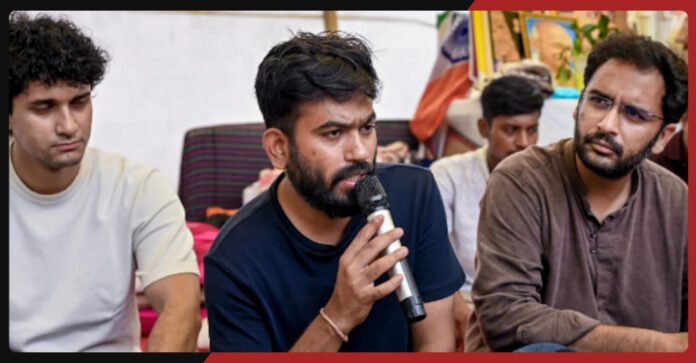

New Delhi, October 16, 2026: Abhijeet Dipke, founder of the Cockroach Janta Party (CJP), has declared that he is prepared to face arrest rather than abandon his planned protest campaign in Delhi and Mumbai. His statement comes amid heightened security arrangements, police restrictions and continuing tensions surrounding demonstrations demanding the resignation of Chief Election Commissioner Gyanesh Kumar.
Dipke’s remarks have brought renewed attention to the CJP-led movement, which has been organising protests over the Special Intensive Revision (SIR) of electoral rolls and concerns about the removal of names from voter lists. The organisation has argued that the revision process raises serious questions about electoral transparency and citizens’ voting rights. Election authorities, however, have maintained that the exercise is intended to identify duplicate and ineligible entries and have defended the process.
Speaking ahead of the planned demonstrations, Dipke alleged that he was being monitored by security personnel and claimed that vehicles without number plates had been following him. He said he was aware that police could detain him but insisted that such a possibility would not force him to withdraw.
“If we have to go to jail to wave the Tiranga in this country, then we are ready for it,” Dipke said, according to media reports. He maintained that the proposed demonstration would be peaceful and centred on waving the national flag.
The CJP announced demonstrations at Central Park in Delhi’s Connaught Place and at Azad Maidan in Mumbai. The protests were also intended to express solidarity with party leaders Ashutosh Ranka and Saurav Das, who were reportedly placed in five-day judicial custody after their detention in connection with an earlier demonstration at Jantar Mantar.
The latest confrontation follows a series of protests and preventive police actions involving members and supporters of the organisation. Earlier demonstrations had drawn attention because of the large security deployment and restrictions imposed on gatherings in the national capital.
In Delhi, authorities have cited prohibitory orders and the absence of the necessary permissions for a large assembly at Central Park. Police have maintained that waving the national flag is not itself prohibited, but an organised march or gathering must comply with applicable legal restrictions.
The Delhi High Court declined to restrain the proposed demonstration and recorded the police’s assurance that the gathering would be regulated. According to reports, police indicated that a limited group of 11 people could be permitted to carry the national flag and sing the national anthem at a suitable location in Central Park. Mumbai police, meanwhile, reportedly granted permission for the gathering at Azad Maidan, a designated protest site.
These differing arrangements have made the two-city protest an important test of how authorities balance public order with the right to peaceful assembly.
For Dipke and the CJP, the central demand remains the resignation of Chief Election Commissioner Gyanesh Kumar and a review of the disputed voter-list revision. The organisation argues that public pressure is necessary to secure accountability, while the authorities insist that demonstrations must remain within the law.
The coming days may determine whether the movement can maintain its momentum through peaceful demonstrations and legal challenges. Dipke’s willingness to risk detention has become a prominent part of his message, but the broader debate extends beyond one political leader.
At its heart, the dispute concerns electoral accountability, the management of public protests and the space available for dissent in a democracy. Whether the demonstrations achieve their political objectives remains uncertain, but the CJP’s campaign has placed these questions firmly in the public conversation.