


India’s relationship with Israel has always been complex—quietly cooperative yet publicly restrained. Under Prime Minister Narendra Modi, restraint gave way to overt partnership.
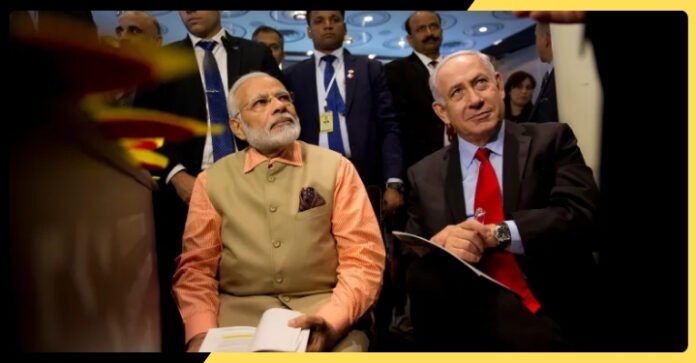
The transformation was not merely diplomatic but symbolic. Modi’s 2017 visit to Israel, complete with personal gestures alongside Benjamin Netanyahu, broke psychological barriers that had shaped Indian foreign policy since independence. The visit highlighted shared priorities: security, innovation, and economic modernization.
At the heart of this pivot was pragmatism. Israel had long been among India’s top defense suppliers, providing surveillance systems, drones, and missile technology. As India faced complex security challenges—from border tensions to terrorism—the appeal of Israeli expertise grew stronger.
However, symbolism matters in diplomacy. For decades, India positioned itself as a champion of Palestinian self-determination. Modi’s decision not to pair his Israel visit with a trip to Palestinian territories marked a departure from that tradition. Though he later visited Ramallah separately, the sequencing underscored a new hierarchy of priorities.
Domestically, the shift reflected broader ideological currents. Modi’s political base often views Israel as a model of national security resilience. Internationally, the move aligned India more closely with emerging Middle Eastern dynamics, including growing Arab-Israeli normalization.
Still, the recalibration carries costs. India must balance its strategic partnership with Israel against energy dependencies and diaspora ties in the Arab world. Moreover, its historical credibility as a voice of the Global South faces scrutiny when its positions appear less vocal on Palestinian grievances.
Ultimately, Modi’s approach illustrates a larger transformation in Indian foreign policy: from postcolonial idealism to assertive pragmatism. Whether seen as a necessary modernization or a moral compromise, the breaking down of walls between India and Israel marks one of the most significant diplomatic shifts of his tenure.