

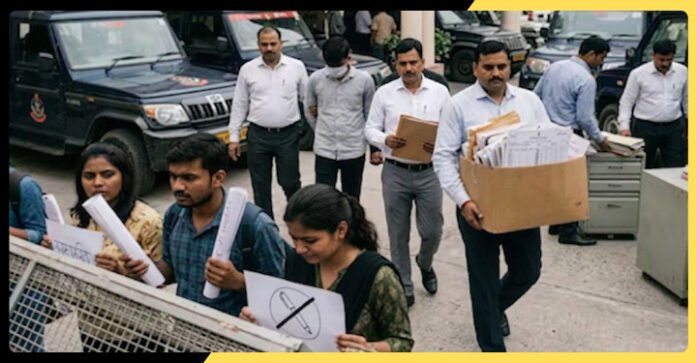

The alleged NEET UG 2026 paper leak has once again triggered a nationwide debate over the integrity of competitive examinations in India. According to investigators, one of the accused reportedly purchased the leaked question paper for his son, who had earlier passed Class 12 with grace marks. The shocking revelation has intensified concerns about organized exam fraud networks operating across multiple states.
Officials probing the case said the accused father allegedly contacted intermediaries who promised access to the NEET UG paper before the examination. Preliminary findings suggest large sums of money exchanged hands in return for the leaked material. Authorities believe the accused wanted to secure a medical seat for his son despite the student’s weak academic background.
Investigators have reportedly uncovered WhatsApp chats, bank transactions, and call records linking suspects to a wider network involved in examination malpractice. Police sources claim the leak was orchestrated days before the exam, with select candidates allegedly receiving question papers and answer keys through encrypted channels.
The son at the center of the controversy had reportedly struggled academically throughout school. Officials said he cleared his Class 12 board exams only after receiving grace marks in key subjects. Investigators suspect that fear of failing to secure admission through merit may have pushed the family toward illegal methods.
The case has sparked outrage among genuine NEET aspirants who spend years preparing for the highly competitive medical entrance examination. Students and parents across the country have demanded strict punishment for those involved. Many believe paper leaks destroy trust in the education system and unfairly disadvantage honest candidates.
Education experts argue that the increasing commercialization of competitive exams has created a thriving black market for leaked papers. Coaching mafias, corrupt officials, and middlemen allegedly exploit desperate families willing to pay enormous amounts to guarantee success.
Authorities are now examining whether the accused acted independently or was connected to a larger syndicate operating nationwide. Several suspects have reportedly been detained for questioning, while digital devices seized during raids are being analyzed for further evidence.
Political reactions have also intensified following the revelations. Opposition leaders accused authorities of failing to safeguard major national examinations, while government representatives assured strict action against all culprits. Calls for reforms in examination security systems have grown louder after repeated allegations of leaks in recent years.
Experts suggest stronger encryption, last-minute paper generation, AI-based surveillance, and tighter monitoring of exam centers to prevent future incidents. Some educationists have also recommended shifting toward adaptive testing systems that reduce the possibility of mass leaks.
Meanwhile, thousands of students remain anxious about the credibility of NEET UG 2026 results. Several student organizations have demanded transparency in the investigation and urged authorities to ensure deserving candidates are not penalized because of the actions of a few.
As the probe expands, the incident serves as a grim reminder of the immense pressure surrounding medical admissions in India. For many families, securing a medical seat is seen as a pathway to prestige and financial security. However, investigators warn that resorting to illegal shortcuts could permanently damage the futures of both parents and students involved.
The coming weeks are expected to reveal whether the leak was limited to a handful of candidates or part of a larger organized racket threatening the credibility of one of India’s most important entrance examinations.