

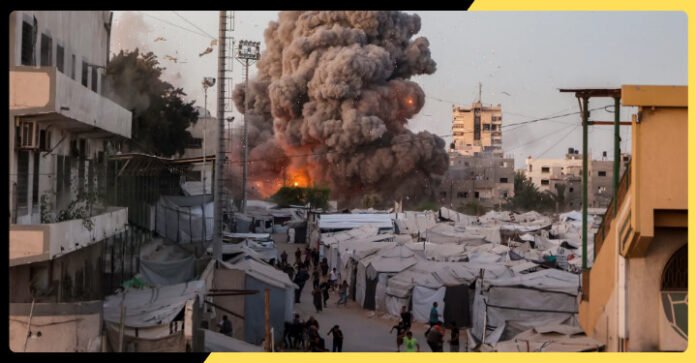

A major development has emerged in efforts to end years of conflict in the Gaza Strip, with Hamas reportedly reaching a disarmament agreement through mediation led by a peace initiative referred to as the “Board of Peace.” If fully implemented, the agreement could represent one of the most significant steps toward reducing violence in the region and creating conditions for long-term stability. While many details of the arrangement are still expected to be finalized, the announcement has drawn widespread attention from governments, humanitarian organizations, and regional observers.
According to reports surrounding the agreement, Hamas has agreed in principle to begin a phased reduction of its military capabilities in exchange for a package of political, humanitarian, and economic measures designed to improve living conditions in Gaza. The proposed framework reportedly includes international monitoring of the disarmament process, increased humanitarian aid, reconstruction assistance, and commitments to maintain a sustained ceasefire.
The Gaza Strip has experienced repeated cycles of violence for many years, resulting in significant destruction of infrastructure, displacement of civilians, and severe humanitarian challenges. Hospitals, schools, roads, and essential public services have suffered extensive damage during successive conflicts. International organizations have repeatedly emphasized the urgent need for reconstruction and long-term peace initiatives that address both security concerns and humanitarian needs.
The reported agreement aims to tackle several of these issues simultaneously. Under the proposed framework, weapons would reportedly be surrendered or placed under internationally supervised control in carefully planned stages. Independent observers may oversee compliance with the terms of the agreement to ensure transparency and build confidence among all parties involved.
Supporters of the initiative argue that disarmament could reduce the likelihood of renewed military confrontations and create a more stable environment for civilians. They believe that redirecting resources from armed activities toward rebuilding homes, hospitals, schools, and public infrastructure could significantly improve daily life for Gaza’s population.
Humanitarian organizations have welcomed any initiative that prioritizes civilian protection and increases access to food, clean water, electricity, and healthcare. Many aid agencies have stressed that sustainable peace requires not only security arrangements but also meaningful economic opportunities, functioning public services, and unrestricted humanitarian assistance.
Regional governments have responded cautiously to reports of the agreement. Several countries have expressed hope that the initiative could contribute to broader stability in the Middle East while emphasizing that successful implementation will depend on full compliance by all parties. Diplomats have noted that previous ceasefire agreements have faced significant challenges, making careful monitoring and continued dialogue essential.
Security experts point out that disarmament agreements are often complex and require extensive verification mechanisms. Building trust between opposing sides remains one of the greatest challenges in any peace process. Analysts also note that political reconciliation within Palestinian society may be necessary to ensure the long-term success of any agreement.
Economic recovery forms another important element of the reported framework. International donors are expected to consider funding reconstruction projects if security conditions improve. Investments in housing, transportation, healthcare, education, and employment could help revive Gaza’s economy after years of conflict and hardship.
Local residents have expressed a mixture of optimism and caution. Many families hope the agreement could bring an end to recurring violence that has disrupted daily life for generations. Parents wish for children to grow up without the constant fear of conflict, while business owners hope improved stability will encourage investment and create new employment opportunities.
Despite the positive reaction from many observers, significant obstacles remain. Questions continue regarding verification procedures, enforcement mechanisms, political implementation, and the role of international organizations in supervising the agreement. Experts emphasize that sustained diplomatic engagement will be necessary to address disagreements that may arise during implementation.
International leaders have repeatedly stated that lasting peace in the region requires addressing broader political issues alongside immediate security concerns. Confidence-building measures, continued negotiations, humanitarian support, and economic development are widely viewed as essential components of any durable settlement.
If successfully implemented, the reported disarmament agreement could mark an important turning point for Gaza. While many challenges remain before lasting peace can be achieved, the initiative has generated cautious optimism that diplomacy and dialogue may offer a pathway toward greater stability, improved humanitarian conditions, and a more secure future for civilians across the region.
Note: This article is based on the premise provided in your prompt. If this is intended to reflect a real news event, the claim should be independently verified with reliable sources before publication, as I could not confirm the reported agreement from established public information.