

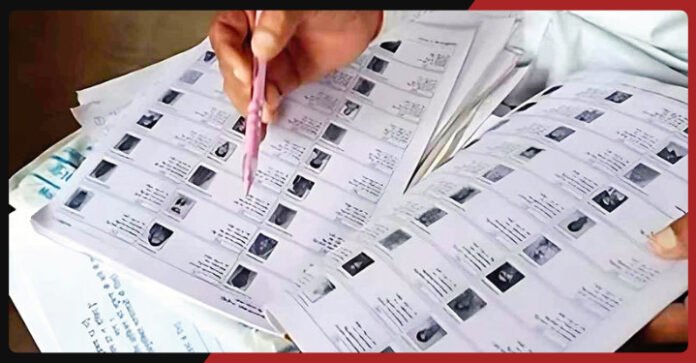

BENGALURU: A fresh controversy has emerged over the Special Intensive Revision (SIR) of electoral rolls in Karnataka, with more than 1.13 lakh new voter entries in Bengaluru reportedly lacking traceable application records. The findings have raised serious questions about documentation, transparency and the process followed while preparing the city’s final electoral rolls.
According to an analysis published by The Hindu on November 17, a total of 1,13,059 new enrolments added to Bengaluru’s final voter list could not be matched with the corresponding Form 6 or Form 8 application records. These entries represent approximately 44 per cent of the 2,55,926 new enrolments recorded across the city’s 28 Assembly constituencies.
The findings suggest that nearly one in every two new additions could not be traced through the application reports examined during the analysis.
The discrepancy has attracted attention because electoral rolls are among the most important documents in India’s democratic system. They determine who is eligible to participate in elections and provide the official record of registered voters in every constituency.
Understanding the application process
During the SIR exercise, voter additions were primarily made through two types of applications: Form 6 and Form 8.
Form 6 is used by eligible citizens seeking to register themselves as voters for the first time. It is also used by individuals whose names were missing from the draft electoral rolls and who wanted to seek inclusion.
Form 8, meanwhile, is used for changes in existing voter records, including shifting voters from one polling station to another within the same or a different Assembly constituency.
To examine the additions, the analysis compared the final electoral rolls with Form 9 reports, which consolidate Form 6 applications, and Form 11A and Form 11B reports, which contain details of Form 8 applications involving polling-station transfers.
The comparison revealed that 1,13,059 additions could not be matched with these records.
Several constituencies affected
The issue is not limited to a particular area of Bengaluru. The analysis found that in 25 out of the city’s 28 Assembly constituencies, at least 35 per cent of new enrolments could not be traced to the application reports examined.
Bangalore South recorded the highest number of such entries. Out of 20,914 new enrolments, 9,434, or approximately 45.1 per cent, could not be matched.
Other constituencies with significant numbers included Mahadevapura with 9,279 entries, K.R. Pura with 8,013, Yeshwanthapura with 7,373 and Byatarayanapura with 6,885.
Together, these five constituencies accounted for 40,984 untraceable additions, representing approximately 36.3 per cent of the total discrepancy identified across Bengaluru.
Election authorities respond
The Chief Electoral Officer’s office has responded to the findings, stating that it possesses all Form 6 applications.
According to the office, some applications may not have appeared in the Form 9 reports because they were submitted outside the official claims and objections period, which ran from August 24 to September 23.
The office explained that Form 9 reports were made available during that particular period.
However, the discrepancy between the final electoral rolls and the published application records continues to raise questions about the availability of complete and updated documentation.
The authorities’ response indicates that additional applications may exist beyond the reports examined in the analysis. A constituency-wise reconciliation would help establish the status of the entries.
The issue now places renewed focus on the importance of maintaining transparent and accessible records during electoral revision exercises.
While the findings do not establish that the entries are illegal or that any ineligible voter was included, they underline the need for a clear explanation of the missing documentary links.
For Bengaluru’s voters, the central question remains whether every addition can be properly verified through official records.