

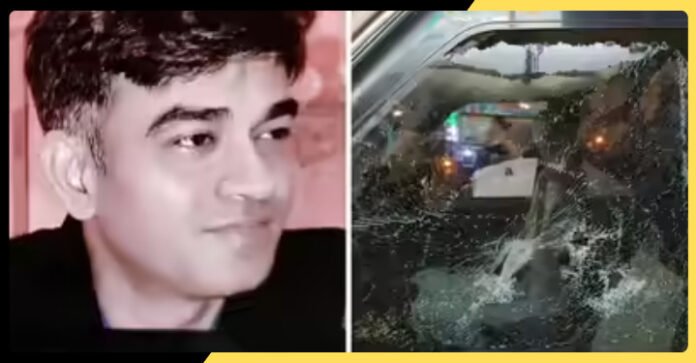

The political atmosphere in West Bengal took a grim turn after Chandranath Rath, a close associate of senior BJP leader Suvendu Adhikari, was shot dead in an alleged incident of post-poll violence. The killing has intensified tensions across the state, reigniting debates over political clashes and law-and-order concerns following the recently concluded Assembly elections.
According to local reports, Rath was attacked late in the evening while returning home from a meeting with party workers. Eyewitnesses claimed that unidentified assailants intercepted his vehicle before opening fire at close range. He was rushed to a nearby hospital but succumbed to his injuries shortly after arrival.
The BJP leadership reacted strongly to the incident, accusing ruling party workers of orchestrating targeted attacks against opposition supporters after the election results. Suvendu Adhikari condemned the killing, describing Rath as a “dedicated grassroots worker” who had actively campaigned during the elections. He demanded an immediate investigation monitored by central agencies and alleged that opposition voices were being silenced through violence.
The ruling Trinamool Congress rejected the allegations and accused the BJP of politicising a tragic incident for electoral gains. Party leaders stated that the police would conduct a fair investigation and urged political groups to avoid spreading unverified accusations. They also pointed out that violence during elections has affected workers from multiple parties over the years.
Police officials confirmed that a murder case had been registered and that multiple teams were conducting raids to identify the attackers. Security was tightened in several sensitive districts as tensions rose among rival political groups. Additional police personnel were deployed to prevent retaliation and maintain public order.
The killing has once again drawn national attention to the recurring issue of political violence in West Bengal. Human rights activists and political observers have repeatedly expressed concern over clashes during and after elections, often resulting in injuries, arson, and deaths. Analysts believe the fierce rivalry between political parties has created an atmosphere where local-level confrontations escalate rapidly.
Residents in Rath’s locality described him as an influential political organiser with strong support among grassroots workers. Many locals gathered outside his residence as news of his death spread, while party supporters organised protests demanding justice. Roads were blocked in some areas, disrupting normal life and increasing pressure on authorities to act swiftly.
Political analysts argue that post-poll violence in Bengal has become a recurring pattern that damages democratic values. They believe stronger administrative neutrality and quicker legal action are necessary to restore public confidence. The latest incident may also influence future political narratives as parties prepare for upcoming civic and parliamentary contests.
Meanwhile, the Election Commission and central leadership of various political parties are closely monitoring developments. Calls for stricter security measures in politically sensitive districts have grown louder following the incident.
As investigations continue, Chandranath Rath’s death has become a flashpoint in Bengal’s volatile political landscape. The tragedy has once again highlighted the deep divisions between rival parties and the urgent need for peace and accountability in the state’s political culture.