

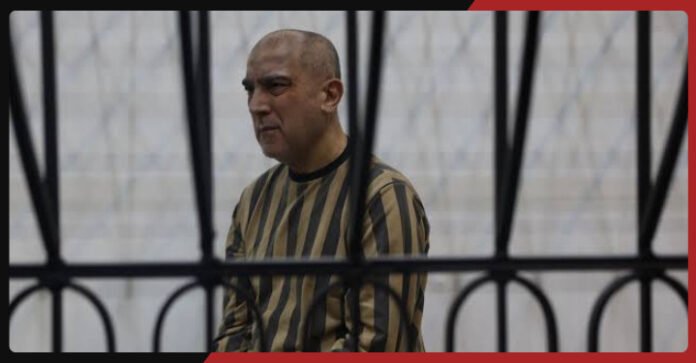

A Syrian court has sentenced former President Bashar al-Assad to death in absentia in a landmark trial examining crimes committed during his long rule and the conflict that devastated the country. The ruling also sentenced his younger brother Maher al-Assad and his cousin Atef Najib to death. Najib, a former senior security official in Daraa, was present in court when the verdict was delivered, while Bashar and Maher were tried in absentia after fleeing Syria.
The verdict represents one of the most dramatic moments in Syria’s post-Assad judicial process. For years, allegations of killings, torture, arbitrary detention and violent repression were associated with the Assad government and its security apparatus. The Syrian conflict, which began after protests erupted in 2011, resulted in enormous human suffering, with hundreds of thousands of people killed and millions displaced.
The trial is particularly significant because it places senior figures from the former regime before a Syrian national court. Atef Najib, who served as head of the Political Security Branch in Daraa, was one of the prominent officials connected to the security response to protests in the early months of the uprising. His role has made him an important figure in discussions about how the Assad government responded to dissent.
Najib’s trial began earlier this year at the Fourth Criminal Court in Damascus. According to the Syrian Network for Human Rights, proceedings began on April 26, 2026, and the case included charges connected to the violent suppression of civilian protests in Daraa in 2011. Bashar al-Assad, Maher al-Assad and other former regime figures were listed among defendants who were absent from court.
The events in Daraa are central to the case because the southern Syrian city became a symbol of the uprising against Assad’s government. In 2011, protests intensified after teenagers were detained and reportedly tortured after writing anti-government graffiti. The security response became one of the early flashpoints in the conflict that eventually spread across Syria. Najib was serving as the head of Political Security in Daraa at the time.
The death sentence against Assad is also deeply symbolic because he ruled Syria for nearly a quarter of a century after succeeding his father, Hafez al-Assad. His government survived years of armed rebellion, international pressure and military intervention before opposition forces eventually captured Damascus and ended his rule.
Assad subsequently fled Syria and went into exile in Russia. Because he was not present before the Syrian court, the verdict against him was issued in absentia. The same applies to Maher al-Assad, who was one of the most powerful figures within the former government’s military and security structure.
For victims and their families, the verdict could become an important milestone in the search for accountability. Many Syrians have spent years demanding answers about relatives who disappeared, were detained or were killed during the conflict.
However, the ruling also raises significant legal questions. Earlier analysis by the Syrian Network for Human Rights highlighted concerns regarding the legal framework, the classification of crimes, individual criminal responsibility and procedural guarantees surrounding trials in absentia.
The case therefore carries two meanings. Politically, it marks the dramatic fall of a former president once considered nearly untouchable. Legally, it represents an attempt by Syria’s new authorities to establish a national mechanism for prosecuting senior figures associated with the former regime.
Whether the death sentences are ultimately carried out remains a separate question, particularly because Assad and Maher remain outside Syria. Nevertheless, the verdict has already entered Syrian history as a major step in the country’s attempt to confront the legacy of a devastating conflict.