

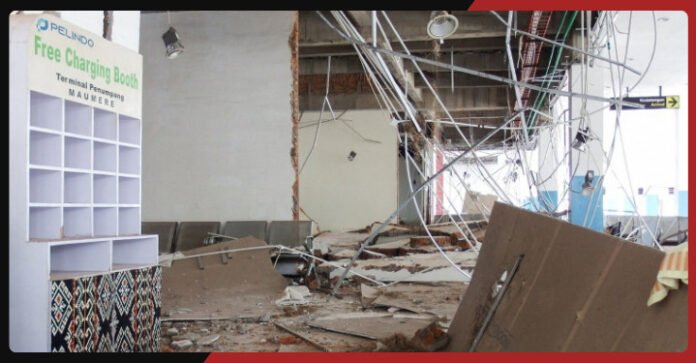

A powerful 7.7-magnitude earthquake off Indonesia’s Flores Island has left communities facing death, destruction and widespread fear. Videos and images from affected areas showed buildings collapsing, residents fleeing into the streets and emergency workers searching through piles of rubble for survivors. The initial death toll of 20 later rose to at least 38 as rescue operations expanded.
The earthquake struck early Saturday morning in the waters off Flores, in East Nusa Tenggara province. Because the earthquake was relatively shallow, the shaking was felt strongly across several areas. Residents described a sudden and violent movement that sent people scrambling out of houses, offices and other structures.
In many communities, the first instinct was to escape falling objects and collapsing walls. Footage circulating online showed people rushing away from buildings while dust and debris filled the air. Some structures appeared severely damaged within moments of the shaking.
The earthquake also caused landslides, creating another major threat for communities living near mountainous areas. One landslide in Reok village was reported to have killed 16 people, according to reports on the disaster. Roads were also damaged, leaving some areas difficult for rescuers to reach.
Maumere was among the locations where rescue teams reported significant casualties. Emergency workers found victims and continued searching buildings where people were believed to be trapped. The rescue effort was complicated by damaged infrastructure and interruptions to communications.
Hospitals and other public facilities were also affected by the strong shaking. In some locations, patients and residents were moved outside as a precaution because of fears that damaged buildings could collapse during aftershocks.
The earthquake briefly raised fears of a tsunami. Authorities issued a warning for coastal areas and residents moved toward higher ground. The warning was later cancelled after no significant continuing tsunami threat was detected. However, the initial alert added another layer of panic to an already chaotic situation.
Around 2,000 residents evacuated affected communities. Many people remained outside their homes even after the immediate danger had passed because aftershocks continued and some buildings were no longer considered safe.
The disaster also exposed the logistical difficulties of responding to emergencies across Flores. The island’s geography, damaged roads and disrupted communications made it harder for rescue teams and supplies to move quickly.
Indonesia’s location along the Pacific Ring of Fire makes earthquakes a recurring danger. The country has experienced some of the world’s deadliest seismic disasters, including the 2004 Indian Ocean earthquake and tsunami.
For residents of Flores, the latest disaster has brought memories of previous destructive earthquakes back to the surface. Authorities are now focused on rescue, medical treatment, evacuation and damage assessment.
The dramatic visuals emerging from the island provide a stark picture of how quickly a powerful earthquake can transform ordinary morning life into a fight for survival.