

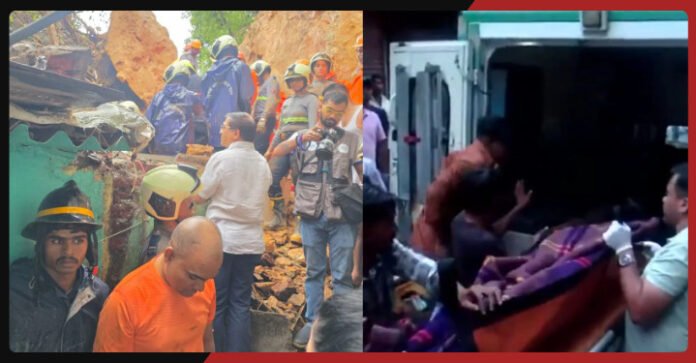

A devastating landslide struck Mumbai’s Kurla area after intense rainfall, leaving at least five people dead and six others injured, according to initial reports. The incident occurred in the Gaushiya Chawl area of Chirag Nagar in Kurla during the early hours of Wednesday, August 12, as heavy rain continued to lash several parts of Mumbai. Later reports put the death toll at six, highlighting the rapidly evolving nature of the rescue operation.
The landslide occurred when residents of the densely populated settlement were asleep. The sudden movement of earth and debris gave people little time to react. Several structures were affected, with debris reportedly trapping people underneath. The incident immediately triggered a major emergency response involving the Mumbai Fire Brigade, civic authorities, police personnel and rescue teams.
According to reports, the incident was recorded at around 3:48 am. At that hour, most residents were inside their homes, making the situation particularly dangerous. Rescue personnel reached the location and began searching through the debris for survivors. The operation was complicated by continuing rainfall and unstable ground conditions.
The injured people were taken to nearby hospitals for medical treatment. Authorities continued to assess the condition of the affected residents while rescue workers searched the debris for anyone who might still be trapped.
Mumbai’s monsoon season frequently brings heavy rainfall, but extreme weather can create additional risks in areas located near slopes, hills and vulnerable structures. Water saturation can weaken soil, increasing the possibility of landslides and structural failures.
The Kurla incident has once again drawn attention to the risks faced by residents living in vulnerable settlements. In densely populated parts of Mumbai, many families live in closely packed homes where access for emergency vehicles can be difficult. When a disaster occurs during the night, rescue operations can become even more challenging.
The tragedy also comes amid broader concerns over Mumbai’s rainfall and monsoon preparedness. Several areas of the city have experienced intense rain, waterlogging and disruptions during the season. Authorities have repeatedly advised residents to remain alert during periods of heavy rainfall.
The changing casualty figures have also demonstrated why officials must carefully verify information during an ongoing disaster. Initial reports said five people had died and six were injured, while later reports indicated that the death toll had risen to six.
For families in Kurla, however, the numbers represent a deeply personal tragedy. As rescue teams continued their work, relatives and neighbours gathered near the site hoping for information about those missing or injured.
The Kurla landslide serves as another grim reminder of Mumbai’s vulnerability during extreme monsoon conditions. While rescue teams work to save lives, the incident is likely to renew questions about slope safety, vulnerable settlements, drainage systems and preparedness for intense rainfall across the city.