

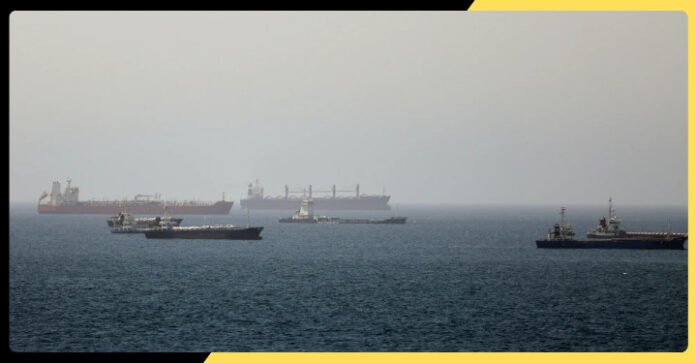

Global oil markets experienced a sharp but short-lived spike following heightened concerns over potential disruptions linked to evacuation plans and security developments around the Strait of Hormuz. The waterway, one of the world’s most critical energy chokepoints, handles a significant share of global crude oil and liquefied natural gas shipments. Any perceived risk to its stability tends to trigger immediate reactions in energy markets, as traders quickly price in potential supply shocks.
In the early phase of the incident, crude oil prices surged as traders responded to reports suggesting that evacuation planning and regional security escalations could threaten shipping lanes. Benchmark crude contracts climbed sharply within hours, reflecting fears that even a temporary disruption could tighten global supply. Market participants moved into defensive positioning, with increased buying of oil futures and hedging activity across major exchanges in London and New York.
However, the rally began to lose momentum as further updates indicated that the evacuation-related developments were precautionary rather than indicative of an imminent closure or sustained blockade. Diplomatic signals and maritime monitoring reports suggested that commercial shipping continued to move through the Strait with only minor delays. As clarity improved, speculative pressure eased, and profit-taking emerged among traders who had entered the market during the initial spike.
By the following trading sessions, oil prices had begun to stabilize, retreating from their highs as supply disruption fears were reassessed. Brent crude and West Texas Intermediate both reflected moderated gains, returning closer to their pre-spike trading ranges. Analysts noted that while geopolitical risk remains a persistent feature of energy markets, the absence of confirmed supply interruption helped restore a degree of confidence.
Market analysts emphasized that the Strait of Hormuz remains a structurally sensitive region for global energy flows, but historical patterns show that price spikes triggered by geopolitical headlines often fade unless concrete disruptions occur. Traders have become increasingly adept at distinguishing between rhetoric-driven volatility and actual supply-side constraints. This dynamic contributed to the relatively quick cooling of prices after the initial surge.
Another factor supporting stabilization was the presence of relatively balanced global supply conditions at the time of the incident. Adequate production levels from key exporters, along with strategic petroleum reserves in several consuming nations, helped reduce panic buying. Additionally, shipping insurance rates, which often spike during regional tensions, did rise temporarily but did not reach levels typically associated with sustained crisis conditions.
Energy analysts also pointed to algorithmic trading as a contributor to the sharp initial spike and subsequent correction. Automated systems often react rapidly to geopolitical keywords and risk signals, amplifying early price movements. Once human traders reassessed the situation and headlines softened, these positions were unwound just as quickly, accelerating the retreat in prices.
Despite the easing trend, caution remains in the market. The Strait of Hormuz continues to be closely monitored due to its strategic importance, and any renewed escalation could quickly reverse the current stability. Traders are now focusing on upcoming inventory reports, production guidance from major oil-producing nations, and broader macroeconomic indicators that influence demand.
In summary, the oil market’s reaction highlights a familiar pattern: rapid escalation on geopolitical uncertainty followed by stabilization once clarity improves. While the initial surge reflected genuine sensitivity to potential supply risks, the subsequent easing underscores the market’s reliance on verified disruptions rather than speculative fears. The situation reinforces the Strait of Hormuz’s enduring role as a critical but highly scrutinized artery in global energy trade, where even minor signals can temporarily reshape pricing dynamics before fundamentals reassert control.