

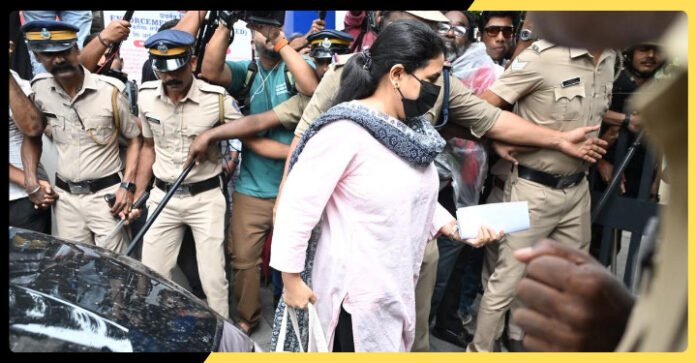

The Enforcement Directorate (ED) recently questioned T. Veena, the daughter of Kerala Chief Minister Pinarayi Vijayan, in connection with the alleged Cochin Minerals and Rutile Limited (CMRL) payment case, marking another development in an ongoing financial investigation that has drawn significant political attention in Kerala. The case revolves around allegations of irregular payments and suspected financial transactions linked to consultancy services, which are under scrutiny for potential violations of corporate and financial laws.
According to investigative agencies, the CMRL case involves claims that payments were made to a private firm associated with Veena Vijayan for services that are now being examined for their legitimacy, valuation, and execution. The ED’s questioning is part of a broader probe aimed at determining whether the transactions involved any violation of the Prevention of Money Laundering Act (PMLA). Officials are reportedly trying to trace the flow of funds, contractual obligations, and the actual delivery of services in exchange for the payments received.
Veena Vijayan has maintained that her company operated independently and provided legitimate consultancy services to various clients, including CMRL. Her legal representatives have asserted that all transactions were conducted transparently and in compliance with existing laws. They have also emphasized that the matter is being given unnecessary political interpretation, arguing that business dealings are being misrepresented as wrongdoing without substantiated evidence.
The ED’s involvement came after preliminary inquiries by other agencies and examination of financial documents, including invoices, agreements, and bank transaction records. Investigators are reportedly assessing whether the payments made were proportionate to the services rendered and whether there was any indirect benefit or quid pro quo arrangement involved. As part of standard procedure, the agency is also examining related corporate entities, auditors, and intermediaries who may have facilitated the transactions.
The case has sparked a political debate in Kerala, with opposition parties alleging irregularities and calling for a deeper probe, while ruling party leaders have dismissed the allegations as politically motivated attempts to target the Chief Minister’s family. Supporters of the Chief Minister argue that the timing and nature of the investigation suggest an attempt to influence public perception ahead of political developments in the state.
Legal experts note that ED investigations typically focus on establishing a clear financial trail before proceeding to any charges under money laundering laws. This includes verifying whether the origin of funds is legitimate, whether services billed were actually delivered, and whether any layering of transactions was done to conceal the source or purpose of payments. In many such cases, the questioning stage is considered preliminary and does not automatically imply wrongdoing.
The CMRL case has also drawn public interest due to its intersection of corporate dealings and political affiliations. Analysts point out that cases involving individuals related to prominent political figures often attract heightened scrutiny, both from investigative agencies and the media, which can amplify their political implications regardless of legal outcomes.
At present, the investigation remains ongoing, and no formal charges have been filed against Veena Vijayan in connection with the ED inquiry. Authorities are expected to continue examining financial records and conducting further interviews before determining the next course of action. The outcome of the probe will likely depend on whether sufficient evidence emerges to substantiate allegations of financial irregularities or whether the transactions are ultimately deemed lawful business arrangements.