

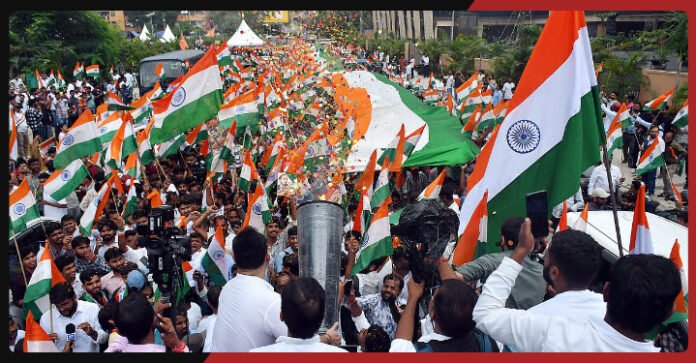

The student agitation in Jharkhand over alleged irregularities in government recruitment examinations has entered a more confrontational phase, with protesters announcing plans to burn effigies of Chief Minister Hemant Soren and Congress leader Rahul Gandhi and to surround the Chief Minister’s residence on August 20 if their demands are not addressed. The announcement comes after weeks of demonstrations in Ranchi and growing frustration among job aspirants who say the recruitment system has failed to provide the transparency and fairness they expect.
The controversy has largely centred on examinations conducted by the Jharkhand Public Service Commission (JPSC) and Jharkhand Staff Selection Commission (JSSC). Students have raised allegations concerning examination procedures, results and recruitment processes. Among their major demands has been action over the 14th JPSC examination and wider reforms in the recruitment system. Earlier protests included marches in Ranchi, hunger strikes and attempts to take demonstrations closer to government institutions.
The escalation follows a period during which students and the state government have exchanged assurances and demands. Chief Minister Hemant Soren has said that the government is committed to improving transparency in recruitment examinations and that students’ concerns would be addressed. The government has also announced cancellation of the 14th JPSC civil services examination, while promising action concerning other examinations and an investigation into examinations conducted by TDPL.
Despite these measures, sections of the protesting students say the response has not resolved the broader issues they have raised. For them, the controversy is not limited to a single examination. They argue that repeated disputes surrounding recruitment have damaged confidence among young people preparing for government jobs.
The August 20 programme is therefore being presented by student leaders as another major phase of their movement. The proposed gherao of the Chief Minister’s residence carries political significance because it would bring the protest directly to the seat of the state government’s top executive. The students have reportedly said that the programme will be intensified if their demands are not met.
The planned effigy-burning programme is also significant because it marks a sharper form of political protest. Reports say students intend to organise the action across Jharkhand’s 24 districts. Such demonstrations traditionally represent public anger and are designed to attract political and media attention.
The agitation has already witnessed clashes between protesters and police. On August 10, thousands of young protesters marched toward the state legislature in Ranchi. Police used tear gas, batons and water cannon to disperse the crowd after tensions escalated. Reuters reported that the protests began on July 25 and had grown into a major youth mobilisation over alleged examination misconduct and recruitment concerns.
The August 20 plan consequently raises questions about law and order as well as the government’s strategy for handling the movement. Any attempt to reach a high-security government residence is likely to result in heavy police deployment and restrictions around the area.
For students, however, the central issue remains recruitment. Government jobs carry enormous importance in Jharkhand, particularly for young people who spend years preparing for competitive examinations. An examination controversy can therefore have consequences beyond the immediate test because candidates may lose valuable time, money and career opportunities.
The state government now faces the challenge of balancing two priorities: responding convincingly to students’ grievances while ensuring that protests remain peaceful. The cancellation of the 14th JPSC examination and promises of examination reforms could provide an opening for dialogue, but protesters appear determined to continue until they believe their wider demands have been addressed.
The coming days will therefore be crucial. If negotiations produce a credible roadmap for examination reforms, the August 20 confrontation could potentially be avoided or reduced. If talks fail, the proposed gherao could become another major flashpoint in Jharkhand’s ongoing recruitment-exam controversy.
At the heart of the dispute is a simple but politically powerful demand: students want confidence that government recruitment examinations will be transparent, impartial and protected from irregularities. Until that confidence is restored, the student movement is likely to remain a major issue for the Hemant Soren government.