

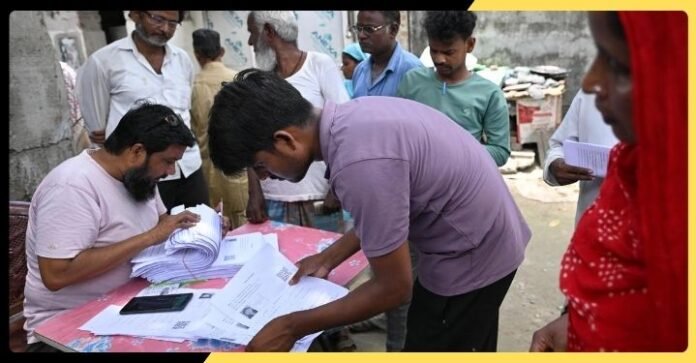

The Supreme Court on Tuesday upheld the Special Intensive Revision (SIR) exercise, describing it as a significant move toward ensuring free and fair elections in the country. The verdict is being seen as a major boost for the Election Commission of India (ECI), which has argued that periodic verification of electoral rolls is necessary to maintain the credibility of the democratic process.
A bench of the apex court observed that accurate voter lists are essential for protecting the sanctity of elections. The court noted that the Constitution gives the Election Commission enough authority to conduct exercises aimed at removing irregularities and ensuring that only eligible citizens participate in voting.
The case had attracted nationwide attention after several political parties and civil society groups challenged the SIR process. Petitioners argued that the exercise could potentially lead to the exclusion of genuine voters, particularly migrants, economically weaker sections, and marginalized communities who may face difficulties in producing documents.
However, the Supreme Court rejected claims that the process was unconstitutional. The judges clarified that the objective of the exercise was not voter suppression but electoral purification. According to the court, a transparent and updated electoral roll is the backbone of democracy.
The bench further stated that elections cannot be considered truly free and fair if fake, duplicate, or ineligible entries remain in voter databases. The court emphasized that strengthening voter verification mechanisms ultimately protects the rights of legitimate voters.
The Election Commission welcomed the verdict and said the ruling reinforces public confidence in electoral institutions. Officials explained that the SIR exercise is designed to identify duplicate names, deceased voters, and individuals who may have shifted constituencies without updating records.
Political reactions to the judgment were mixed. While the ruling party described the decision as a victory for democratic integrity, opposition parties continued to express concerns regarding the implementation process. Some leaders demanded safeguards to ensure that no eligible voter is removed unfairly.
Experts believe the judgment could influence future electoral reforms in India. Legal scholars say the court has effectively recognized the Election Commission’s broader powers in maintaining the purity of electoral rolls while also reminding authorities to follow due process.
The Supreme Court also directed election authorities to ensure transparency and provide sufficient opportunities for citizens to raise objections or correct errors during the revision process. The court stressed that voter awareness campaigns must be conducted so people understand how to verify their names and submit required documents.
Several constitutional experts noted that the judgment balances two competing concerns — the need for accurate electoral rolls and the protection of voting rights. According to analysts, the ruling may pave the way for more technology-driven voter verification systems in the future.
Meanwhile, political debates around voter registration and electoral reforms are expected to continue in the coming months. Opposition parties have already indicated they will monitor the implementation of the SIR exercise closely ahead of upcoming state elections.
The judgment comes at a time when electoral transparency and voter trust have become central political issues across the country. The Supreme Court’s endorsement of the SIR exercise is likely to strengthen the Election Commission’s position while placing responsibility on authorities to ensure fairness at every stage of implementation.
With the court describing the initiative as an advancement toward free and fair elections, the verdict is expected to shape discussions around electoral reforms for years to come.