

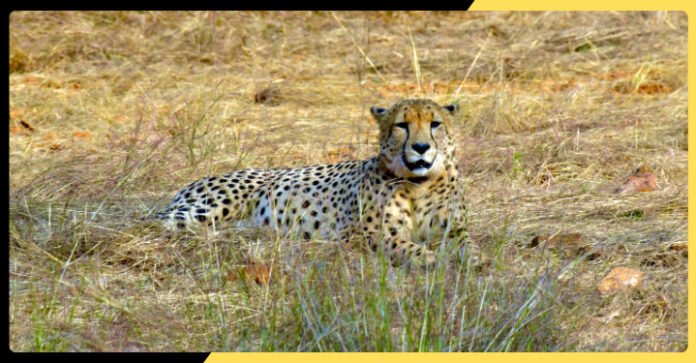

The death of four cheetah cubs at Kuno National Park has once again brought the spotlight back on India’s ambitious cheetah reintroduction programme. The cubs, barely a month old, were found dead during routine monitoring operations carried out by forest officials, triggering fresh concerns among wildlife experts and conservationists about the challenges facing the project.
According to officials associated with Project Cheetah, the cubs belonged to a female cheetah that had been relocated to India as part of the government’s initiative to revive the species in the country after its extinction decades ago. The cubs were under close observation since their birth, which had earlier been celebrated as a milestone achievement for the project.
Forest authorities stated that the exact cause of death would be determined after post-mortem examinations. Preliminary observations, however, suggest that harsh environmental conditions, extreme heat, dehydration, or health complications may have contributed to the deaths. Officials also indicated that the mother cheetah was found distressed near the location where the cubs were discovered.
The incident has reignited debate over the preparedness of Indian wildlife habitats for sustaining cheetah populations. Experts have repeatedly warned that reintroducing a large predator into a new ecosystem requires extensive long-term planning, habitat management, and continuous veterinary supervision. Kuno National Park has been at the centre of this discussion ever since cheetahs from Namibia and South Africa were brought to India under a historic wildlife initiative.
Despite the setback, authorities from the Ministry of Environment, Forest and Climate Change have maintained that isolated incidents should not undermine the overall objectives of the project. Officials insist that conservation programmes involving large carnivores often face setbacks in the initial stages and that lessons from such incidents would strengthen future strategies.
Wildlife experts, however, are divided. While some believe the project still has the potential to succeed, others argue that repeated deaths of cheetahs and cubs indicate systemic gaps in monitoring, climate adaptation, and habitat suitability. Several conservationists have called for greater transparency in sharing health reports and ecological assessments.
The cheetah reintroduction initiative was launched with much fanfare as India sought to restore a species declared extinct in the country in 1952. The programme was projected as a landmark effort in wildlife conservation and biodiversity restoration. Since then, every successful birth in Kuno has been viewed as a symbol of hope for the project’s future.
The loss of the four cubs is also likely to intensify public scrutiny over the management of the reserve. Questions are being raised regarding staffing, veterinary infrastructure, prey availability, and measures taken to protect young cubs during extreme weather conditions. Some experts have suggested the need for temporary intervention methods during critical stages of cub development.
Local communities living around Kuno expressed disappointment over the deaths, especially after months of public enthusiasm surrounding the arrival and breeding of cheetahs. Tourism linked to the project had also generated economic activity in nearby regions.
Officials have assured that monitoring of all remaining cheetahs in the park has been intensified. Veterinary teams and wildlife trackers are continuing round-the-clock surveillance to prevent further losses. Authorities also said that the mother cheetah would remain under close medical observation.
As India’s ambitious conservation experiment continues, the deaths of the four cubs underline both the promise and the complexity of bringing the world’s fastest land animal back into Indian forests.