

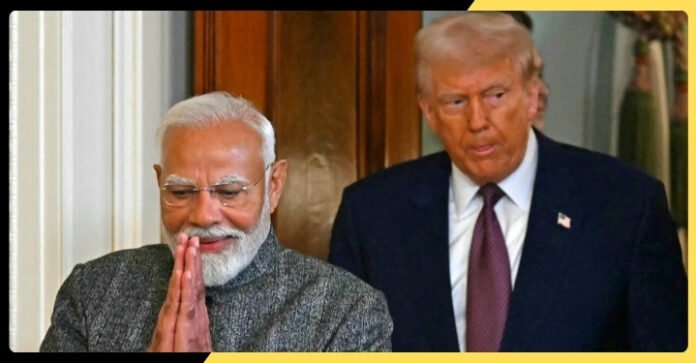

When former US President Donald Trump claimed that India had agreed to “zero tariffs” on American goods, the remark quickly drew attention across diplomatic and economic circles. The statement, made during a public address, appeared sweeping in scope and final in tone. However, the White House factsheet released subsequently on the evolving India–US trade understanding presents a more calibrated and nuanced picture, suggesting that tariff relief—while real—was neither universal nor unconditional.
The factsheet frames the agreement as part of a broader effort to reduce trade frictions between the two democracies, particularly in sectors that had seen repeated disputes over market access. Rather than a blanket removal of tariffs, the document emphasizes sector-specific concessions, phased commitments, and reciprocal market openings. This contrast between rhetoric and documentation highlights a recurring feature of trade diplomacy: political messaging often simplifies what policy texts deliberately complicate.
According to the factsheet, the agreement prioritizes areas where both sides believe early wins are achievable. These include select agricultural products, certain industrial inputs, and medical or technological goods where tariff barriers were seen as disproportionately high relative to strategic value. In these categories, India reportedly agreed to reduce or rationalize tariffs, while the United States offered corresponding relief or regulatory facilitation in areas of Indian export interest.
Crucially, the factsheet avoids the phrase “zero tariff” altogether. Instead, it uses language such as “enhanced market access,” “tariff rationalization,” and “mutually agreed reductions.” Trade experts note that such wording signals flexibility rather than finality. It also leaves room for future negotiations, particularly in sensitive sectors such as dairy, digital services, and pharmaceuticals, where domestic political considerations remain strong on both sides.
Another important element of the document is its emphasis on compliance with multilateral trade norms. The factsheet situates the bilateral understanding within existing World Trade Organization frameworks, indicating that any tariff changes would align with broader obligations. This is significant because it suggests the agreement is not designed to upend existing trade architecture but to work within it.
The White House also highlights the strategic context of the deal. Beyond economics, the factsheet repeatedly references shared values, supply chain resilience, and the importance of trusted partners. In this framing, tariff concessions are not merely transactional but part of a longer-term effort to deepen economic interdependence as a counterbalance to global uncertainty.
From India’s perspective, the factsheet underscores its interest in securing predictable access to the US market, particularly for labor-intensive sectors. While tariffs are only one component of this access, their reduction can have symbolic and practical importance. However, Indian officials have historically resisted broad tariff elimination, arguing that differential development levels require policy space.
In political terms, Trump’s “zero tariff” claim can be read as an attempt to present the agreement as a decisive victory for American exporters. The factsheet, by contrast, reads like a document designed to reassure multiple stakeholders: domestic industries, international partners, and policymakers concerned about precedent.
Ultimately, the gap between the claim and the factsheet does not necessarily indicate contradiction, but rather different audiences and purposes. Public statements often aim for impact, while official documents aim for durability. The India–US trade understanding, as reflected in the factsheet, appears less like a dramatic reset and more like an incremental recalibration—one that may matter more for its direction than for any single headline promise.