

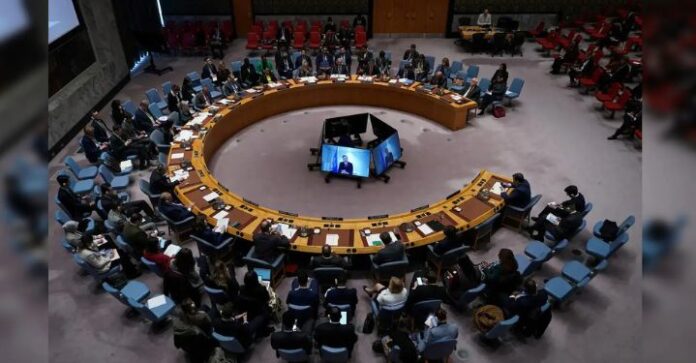

On May 5, 2025, the United Nations Security Council convened an urgent closed-door session to address the escalating tensions between India and Pakistan, following a series of border skirmishes and a deadly terrorist attack in Jammu and Kashmir. The meeting underscored the international community’s growing concern over the potential for a wider regional conflict involving two nuclear-armed nations.
The immediate catalyst for the UNSC’s intervention was the terrorist attack on April 22, 2025, in Pahalgam, Jammu and Kashmir, which resulted in the deaths of 26 individuals, predominantly Hindu tourists. The attack was initially claimed by The Resistance Front (TRF), an offshoot of the Pakistan-based Lashkar-e-Taiba, though the group later retracted its claim. India accused Pakistan of sponsoring the attack, leading to a rapid deterioration in bilateral relations.
In response to the attack, India suspended the Indus Waters Treaty, expelled Pakistani diplomats, closed borders, and revoked visas for Pakistani nationals. Pakistan denied the allegations and retaliated by suspending the Shimla Agreement, closing airspace to Indian aircraft, and halting all trade with India. The situation further intensified with border skirmishes along the Line of Control (LoC), raising fears of a full-scale military confrontation.
The UNSC’s closed consultations aimed to assess the situation and explore avenues for de-escalation. While specific details of the discussions remain confidential, sources indicate that members expressed deep concern over the potential for conflict and emphasized the need for both nations to exercise maximum restraint. The Council reiterated the importance of dialogue and diplomatic engagement to resolve the dispute peacefully.
Key international players have weighed in on the crisis. Russia condemned the Pahalgam attack as a “brutal crime” and reaffirmed its commitment to cooperating with India in combating terrorism. The United Kingdom issued a travel advisory, warning its citizens to avoid travel within 10 kilometers of the LoC. China called for de-escalation and urged both countries to return to negotiations.
The UNSC’s intervention highlights the international community’s recognition of the gravity of the situation. However, the path to peace remains fraught with challenges. Both India and Pakistan have entrenched positions, and the involvement of non-state actors complicates the diplomatic landscape.
As the situation continues to evolve, the role of the United Nations and other international stakeholders will be crucial in facilitating dialogue and preventing further escalation. The coming days will be critical in determining whether diplomatic efforts can succeed in averting a broader conflict.