

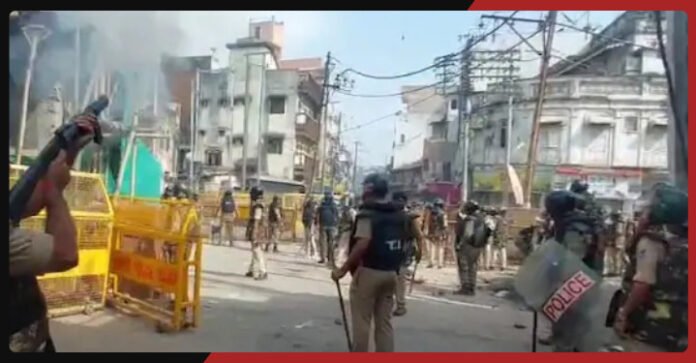

Ujjain witnessed a tense confrontation on Monday after a large group of people gathered to oppose the proposed removal of a portion of the historic Shahi Masjid as part of a road-widening project. The situation escalated at the site, with reports of stone-pelting and police action, including the use of tear-gas shells to disperse the crowd.
The controversy is linked to infrastructure work being undertaken in Ujjain ahead of the Simhastha 2028 religious gathering. Authorities have proposed widening an important road, and a portion of the Shahi Masjid falls within the alignment of the planned project. The issue has become a point of contention between the administration and members of the Muslim community, who have gathered to oppose the proposed removal.
On Monday, tensions rose when protesters and police came face to face near the mosque. According to reports, stones were thrown during the confrontation. Police subsequently used tear gas in an attempt to bring the situation under control. Rapid Action Force personnel were also deployed in the area as authorities sought to prevent the confrontation from spreading.
The latest development follows several days of tension around the mosque. Members of the local Muslim community had gathered at the site over the weekend, with some reportedly staying overnight in opposition to the proposed action. Police and administrative officials had attempted to persuade people to cooperate with the road-widening exercise.
The dispute also has a legal background. The Madhya Pradesh High Court recently dismissed petitions challenging the proposed partial demolition. The court allowed the authorities to proceed with the action, with the administration maintaining that the road-widening project is necessary to manage the large number of devotees expected during Simhastha 2028.
The petitioners had challenged notices issued by the municipal authorities and sought protection against coercive action involving the mosque. Court records show that the mosque management had contested the administrative notices and sought judicial intervention.
Authorities have argued that the road-widening work is part of a broader infrastructure programme and that action is not limited to one religious structure. Earlier court reporting noted that portions of other religious structures along the road had also been affected by the development exercise.
Monday’s confrontation has once again brought attention to the challenge of carrying out large infrastructure projects in densely populated and religiously sensitive areas. While officials are focusing on road capacity and crowd management ahead of Simhastha, local residents and mosque supporters have raised concerns about the impact of the proposed work on the religious site.
With heavy security deployed, authorities are monitoring the situation closely. The use of tear gas reflects the seriousness of the confrontation, while the continuing presence of security personnel indicates that officials are taking precautions to prevent further escalation.
The Ujjain administration now faces the task of maintaining public order while carrying forward the infrastructure project. Further developments are expected as authorities assess the situation at the mosque site and determine the next steps in implementing the road-widening plan.