

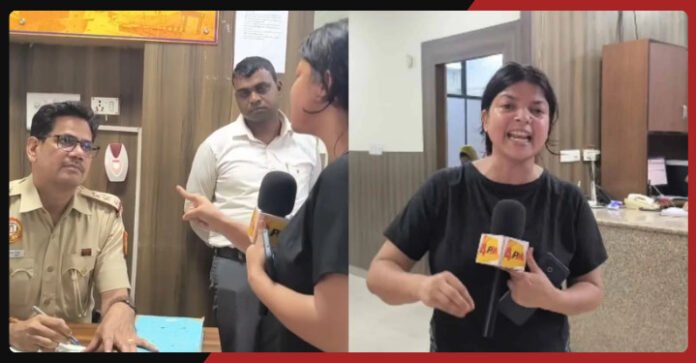

New Delhi: A serious controversy has erupted in the national capital after two women journalists alleged that they were physically assaulted by Delhi Police personnel and that the alleged violence intensified after officers learned about their Muslim identity. The incident, which reportedly took place in South Delhi’s Saket area, has triggered widespread concern about press freedom, police accountability and allegations of religious discrimination.
The two journalists, identified as Shaheen Khan and Nafisa Khan, were reportedly covering an event attended by Delhi Chief Minister Rekha Gupta and Union Home Minister Amit Shah at a hospital in Saket. According to the journalists, they were attempting to report from the location and raise questions when they were stopped by police personnel deployed for security arrangements.
The journalists alleged that they were subsequently detained and taken to Saket Police Station. They claimed that they were physically assaulted inside the police station. Shaheen Khan later shared videos and statements describing the alleged incident, while images and videos circulating on social media showed marks and bruises on the women.
One of the most serious allegations made by the journalists concerns their religious identity. Shaheen Khan claimed that police personnel asked about her name and identity and that the alleged treatment became harsher after officers learned that she and her colleague were Muslims. The women alleged that their surnames and religious identity became a factor in the way they were treated.
Their allegations quickly generated strong reactions from journalist organisations, political leaders and social media users. Several press bodies condemned the alleged assault and demanded an independent and impartial investigation into the incident. Organisations representing journalists called for accountability if police personnel were found responsible for using violence against reporters.
The controversy has also renewed debate over the safety of journalists while reporting in politically sensitive and high-security environments. Media professionals often work in crowded locations, protests, political events and areas under heavy security. Journalists have argued that their professional right to report should be protected even when security restrictions are in place.
However, Delhi Police has strongly rejected the allegations made by the two journalists. Police officials described the claims as factually incorrect and misleading. According to the police version, the women allegedly obstructed a VVIP movement route and did not follow instructions issued by security personnel. Police said they were taken to the station for inquiry and denied that they were assaulted because they asked questions or because of their religious identity.
The conflicting versions have made an independent investigation particularly important. The journalists have presented allegations of physical assault and religious targeting, while Delhi Police has denied wrongdoing and maintained that the action was connected to security arrangements and alleged obstruction.
Videos of the women displaying apparent injuries have intensified public attention, but the complete circumstances surrounding the incident remain disputed. Press organisations have demanded that CCTV footage, police records and other available evidence be examined to establish what happened.
The case now raises larger questions for Indian democracy and journalism. Can reporters freely question political leaders? What protections exist for journalists working around heavily guarded public events? And how should authorities respond when allegations of religious discrimination are made against law-enforcement personnel?
As calls for an investigation grow louder, the focus remains on establishing the facts through a transparent and credible process. For Shaheen Khan and Nafisa Khan, the incident has become not only a personal allegation of police violence but also part of a broader debate about press freedom, women’s safety and equal treatment before the law.
Delhi Police’s denial means that the allegations remain contested, and any final conclusions will depend on the outcome of a fair investigation and examination of all available evidence.