

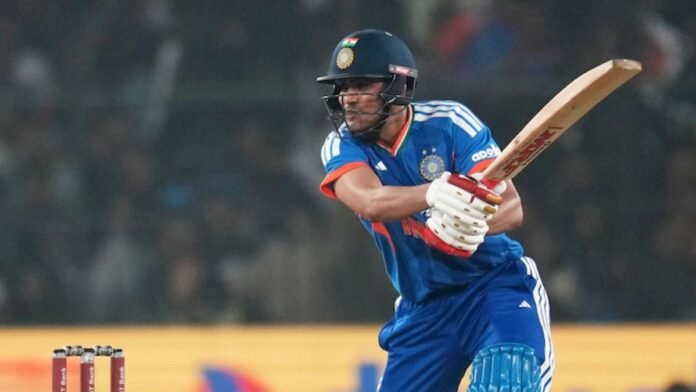

The exclusion of Shubman Gill from India’s T20 World Cup squad has sparked widespread debate, but the selectors’ decision appears rooted less in individual form and more in strategic clarity. As T20 cricket continues to evolve into a game dominated by explosive starts and matchup-based selections, India’s think tank has clearly chosen Powerplay aggression and role certainty over classical consistency.
Gill’s credentials as a batter are unquestionable. Technically sound, composed under pressure, and prolific across formats, he represents the modern all-format Indian batter. However, T20 World Cups demand a specific skill set at the top — immediate impact. India’s recent struggles in ICC T20 tournaments have often been traced back to conservative Powerplay phases, where solid starts failed to translate into match-winning totals.
Selectors have instead leaned towards players who can maximize the first six overs, even at the cost of stability. The preference suggests a belief that early momentum is non-negotiable on global stages, particularly on flat pitches where par scores continue to rise. Gill’s strike rotation and accumulation style, while effective in ODIs and Tests, may not align with this philosophy when compared to openers who consistently clear the infield.
Team balance has also played a crucial role. With middle-order anchors and finishers already locked in, the squad composition demands top-order batters who can take risks without fear of early dismissal. The presence of multi-skill players — those who offer bowling options or exceptional fielding — further squeezes space for a specialist batter.
Another factor working against Gill is timing. While he has delivered standout performances in bilateral series and domestic leagues, his returns in high-pressure T20 internationals have been uneven. In a World Cup scenario where every game is virtual knockout, selectors have opted for players whose T20 profiles better reflect situational dominance rather than long-term promise.
This decision should not be seen as a reflection of Gill’s ability, but rather as a snapshot of India’s tactical priorities at this moment. At 24, he remains firmly part of India’s future leadership and batting core. Missing out on this World Cup could, in fact, sharpen his T20 approach as he adapts to the demands of a format that increasingly rewards audacity over assurance.
For now, India have made their choice clear: fast starts, flexible roles, and a squad built to dictate terms from ball one.