

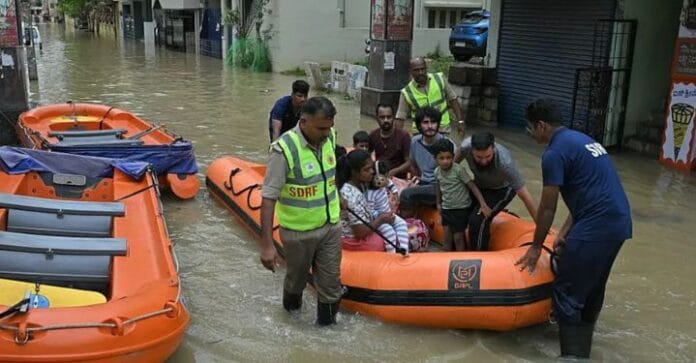

Bengaluru’s reputation as a global tech powerhouse was built on the brilliance of its engineers and entrepreneurs. But when rainwater flooded its tech campuses, it became painfully clear that infrastructure has failed to keep pace with ambition. For the first time in years, the city’s vibrant software production lines were silenced by monsoon fury.
Scenes from the Flood
In HSR Layout, Koramangala, and Mahadevapura, tech professionals waded through waist-deep water just to get home. Startups operating from shared spaces lost servers, laptops, and project data. For many, the day’s headlines read like dystopian fiction: “Office Floating,” “Server Room Flooded,” “Employees Evacuated.”
Disruption Beyond Tech
Tech companies weren’t the only ones affected. Delivery startups like Swiggy and Dunzo suspended services, hospitals ran out of power backup, and Namma Metro stations closed due to water ingress. Schools shifted to online classes—which ironically couldn’t function due to internet and power outages.
Why Did It Happen Again?
Bengaluru’s flood problem isn’t new. Each monsoon, lakes overflow, roads vanish under water, and software parks become islands. The question is: why hasn’t the government acted decisively? The answer lies in outdated master plans, limited budget allocation, and lax law enforcement.
Government’s Position
Chief Minister Siddaramaiah, in a press statement, acknowledged the severity of the issue and promised ₹2,000 crore toward drainage development. However, critics argue that announcements aren’t enough. Implementation delays, tender corruption, and political blame games keep recurring.
Global Repercussions
Bengaluru isn’t just a local economy—it’s a node in the global tech supply chain. Companies from the US, Europe, and APAC depend on engineers in Bengaluru for critical services. Delays here mean project disruptions worldwide.
Solutions Suggested by Experts
Urban experts urge for:
- A citywide climate resilience plan
- Restoration of lakes and rajakaluves (canals)
- Upgradation of sewage and stormwater systems
- Transparent public-private infrastructure partnerships
The time to act is now—not after the next flood.