

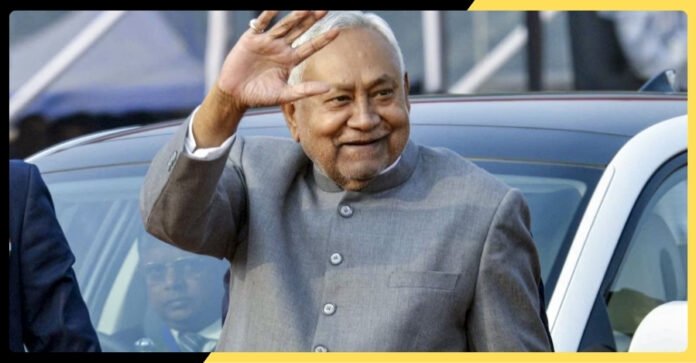

Fresh political speculation surrounding Nitish Kumar’s possible move to the Rajya Sabha has ignited debate about the future leadership structure in Bihar and the long-term direction of the state’s ruling alliance. While no formal announcement has been made, discussions within the ruling coalition suggest that preparations may be underway for a significant transition.
If Nitish Kumar shifts to Parliament’s Upper House, it could mark the beginning of a generational change in Bihar’s leadership. Having dominated state politics for nearly two decades, his potential move would create space for emerging leaders within both the Janata Dal (United) and the Bharatiya Janata Party to redefine governance priorities.
Political observers in Patna note that the timing of these developments is significant. With national elections on the horizon in the coming years, placing a seasoned leader like Nitish Kumar in the Rajya Sabha could strengthen the ruling coalition’s voice in national policymaking. At the same time, it may allow the BJP, as the larger partner in the alliance, to assert greater administrative control within the state.
Inside the National Democratic Alliance, conversations are believed to be focused on ensuring a smooth transition if such a move materializes. Coalition management has been central to Bihar’s governance model, and any leadership change would require careful negotiation to preserve political stability.
Supporters of the chief minister argue that a Rajya Sabha role would allow him to focus on national issues such as federalism, social welfare, and economic reforms — areas where he has long expressed strong views. They see the move not as a retreat, but as an elevation to a broader stage.
However, critics question whether the transition could create uncertainty in Bihar’s administrative machinery. The state has been navigating development challenges ranging from infrastructure gaps to employment concerns. A leadership change, even if planned, may temporarily slow decision-making processes.
Opposition voices, including leaders from the Rashtriya Janata Dal, have demanded clarity from the government, arguing that public speculation without official communication fuels instability. They maintain that governance continuity must remain the priority.
Analysts suggest that the potential move reflects a pragmatic calculation. For Nitish Kumar, transitioning to Parliament could preserve political relevance while reducing the day-to-day pressures of state administration. For the BJP, it could present an opportunity to consolidate its organizational base in Bihar.
Ultimately, whether the shift happens or not, the conversation itself signals that Bihar may be approaching a turning point. The coming weeks are likely to determine whether this moment becomes a historic realignment or simply another episode in the state’s ever-dynamic political landscape.