

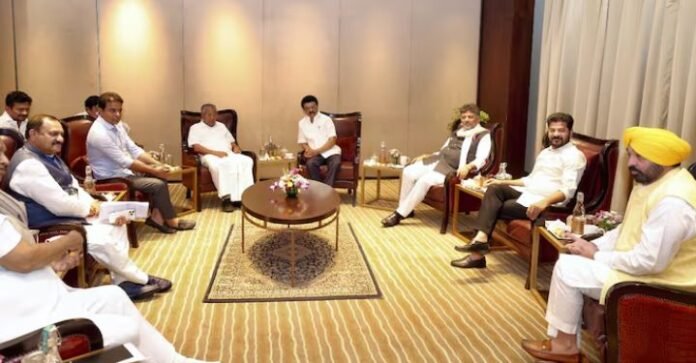

In a landmark decision, a panel led by Tamil Nadu Chief Minister MK Stalin has recommended a freeze on the delimitation of constituencies for an additional 25 years. This decision, passed after extensive deliberations, has sparked debates on the political and administrative implications it could have on the country’s democratic structure.
Delimitation, the process of redrawing electoral boundaries to reflect population changes, is a crucial mechanism for ensuring equitable representation in legislative bodies. However, Stalin’s panel believes that a freeze on this process will preserve political stability, especially in regions with significant demographic shifts. The decision to extend the freeze is seen as an effort to prevent political instability and preserve the status quo, which many believe would allow for a fairer, more balanced political environment.
The proposal will have wide-reaching implications for states with rapidly growing populations, such as Tamil Nadu. For these regions, the freeze will mean that constituency boundaries will remain unchanged, which could impact how votes are distributed and how political campaigns are waged.
Proponents of the move argue that it will prevent political gerrymandering, a practice in which constituency boundaries are drawn to favor a particular political party or group. Stalin’s panel has stressed the importance of keeping electoral boundaries stable and representative for the next generation. They argue that the 25-year freeze would allow time for social, economic, and cultural conditions to evolve before any further adjustments are made.
Opponents, however, warn that this freeze may hinder the fair representation of growing populations in certain areas. They fear that the lack of boundary adjustments could lead to underrepresentation in urban areas or areas experiencing significant demographic changes. Critics argue that the process should remain flexible, responding to population changes and ensuring equitable representation.
The debate around the freeze comes at a time when India’s electoral system is facing increasing scrutiny, particularly with regard to the fairness and accuracy of representation. While the move may be seen as a way to maintain political harmony, it also raises questions about the balance between stability and adaptation in the political system.
This decision is expected to spark further discussions among political leaders, policymakers, and scholars about the future of electoral representation in India.