

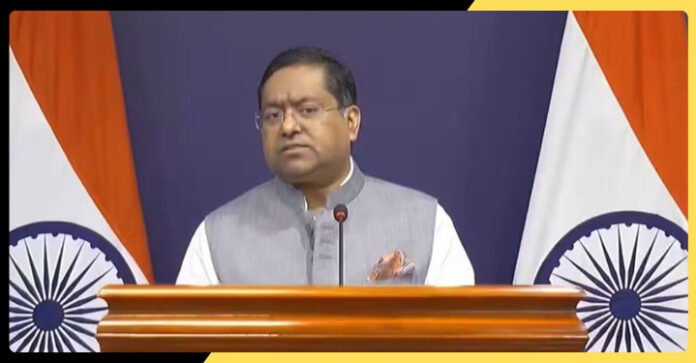

India’s Ministry of External Affairs (MEA) has adopted an unconventional yet increasingly effective communication strategy by using internet memes to reinforce the country’s long-standing position on Jammu & Kashmir (J&K) and Ladakh. The move reflects a broader trend in modern diplomacy, where governments are leveraging social media culture to engage audiences, counter misinformation, and communicate official positions in a manner that resonates with younger generations.
The meme, shared through the MEA’s official digital platforms, quickly gained traction across social media. While humorous in tone, it carried a serious diplomatic message: Jammu & Kashmir and Ladakh remain integral parts of India, and any attempt to portray them otherwise is inconsistent with India’s sovereign position. The post was widely circulated, attracting attention from domestic audiences, foreign observers, and policy analysts alike.
The Ministry’s decision to employ meme culture marks a shift from traditional diplomatic communication, which has typically relied on formal statements, press conferences, and official documents. As social media platforms become the primary source of news and information for millions, governments around the world are increasingly experimenting with creative formats to make official messaging more accessible and shareable.
Officials have consistently maintained that Jammu & Kashmir and Ladakh are inseparable parts of India’s territory. Since the constitutional changes introduced in August 2019, when Article 370 was revoked and the erstwhile state of Jammu & Kashmir was reorganised into two Union Territories, India’s position has remained unchanged. The government has repeatedly asserted that these decisions are internal matters and not open to external intervention.
The recent meme campaign appears to be part of a broader effort to counter narratives circulating online. Social media has become a battleground for information warfare, where misleading maps, edited visuals, and inaccurate claims can spread rapidly. By responding with a creative yet authoritative message, the MEA sought to reaffirm India’s official stance while appealing to digital audiences accustomed to visual and humorous content.
Observers note that the effectiveness of memes lies in their simplicity. Complex geopolitical issues often struggle to gain attention on fast-moving social media feeds. A well-designed meme, however, can communicate a clear message in seconds while encouraging users to share it across platforms. This increases the reach of official communication without relying solely on conventional news coverage.
Communication experts say digital diplomacy has evolved significantly over the past decade. Foreign ministries across the world now maintain active social media accounts to engage citizens, clarify policies, and respond quickly during international developments. India’s MEA has also expanded its online presence, regularly posting updates on diplomatic meetings, humanitarian assistance, evacuation missions, and policy announcements.
The meme strategy demonstrates that governments are adapting to changing patterns of information consumption. Younger audiences often engage more readily with visual storytelling than lengthy policy documents. By embracing internet culture without compromising the seriousness of its message, the MEA aims to ensure that India’s official narrative reaches a wider demographic.
The campaign also highlights the growing importance of combating misinformation. In recent years, several inaccurate maps and misleading claims concerning India’s borders have appeared online. Government agencies have repeatedly objected to such representations and have urged organisations, companies, and digital platforms to depict India’s territorial boundaries accurately. The meme serves as another reminder of India’s consistent position regarding its sovereignty and territorial integrity.
Reactions on social media have been mixed but substantial. Many users praised the Ministry for adopting a modern communication style, describing the approach as relatable and effective. Others viewed it as an innovative example of public diplomacy that reflects how official institutions are evolving with the digital age. The meme generated significant engagement, with thousands of shares, comments, and discussions across multiple platforms.
Political analysts believe that digital communication is becoming an increasingly important aspect of foreign policy. While traditional diplomacy continues through negotiations, official meetings, and international forums, online engagement now plays a complementary role in shaping public perception. Governments recognise that narratives formed on social media can influence both domestic and international audiences.
Experts caution, however, that humour in official communication must be balanced carefully. Diplomatic messaging requires accuracy, consistency, and professionalism. When executed thoughtfully, creative content can humanise institutions and make official positions more understandable without undermining their credibility.
The MEA’s latest initiative illustrates how diplomacy is adapting to the realities of the digital era. Rather than relying exclusively on formal statements, the Ministry has shown that creative communication can effectively reinforce national positions while engaging millions of online users. As technology continues to transform global communication, digital diplomacy is likely to become an even more influential tool in advancing national interests.
Ultimately, the viral meme serves as more than just an internet trend. It reflects India’s continued emphasis on defending its sovereignty over Jammu & Kashmir and Ladakh while embracing innovative methods of public engagement. By combining official messaging with contemporary digital culture, the MEA has demonstrated that even serious geopolitical issues can be communicated in formats suited to the modern information landscape.