

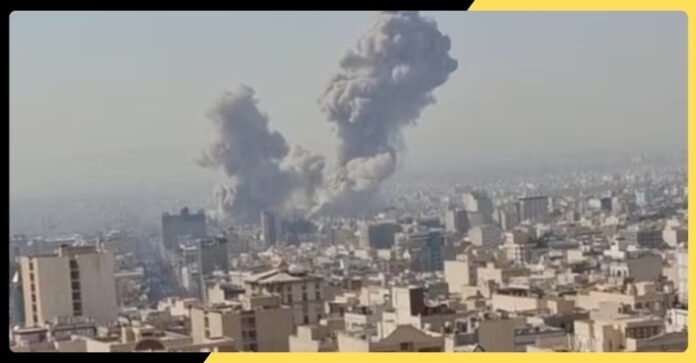

A sharp escalation in Middle East tensions unfolded early Saturday after Israel announced it had carried out what it described as a “preventive strike” against Iran. Shortly after the announcement, multiple explosions were reported across Tehran, sending shockwaves through the Iranian capital and prompting emergency responses.
Israeli officials said the operation was designed to disrupt what they characterized as imminent threats tied to Iran’s military infrastructure. The statement emphasized that the action was defensive in nature, aimed at preempting attacks rather than provoking a broader war. Authorities simultaneously activated nationwide emergency protocols, warning citizens to prepare for possible retaliation.
Residents in Tehran reported hearing at least three loud blasts in different districts of the city. Local media showed images of smoke rising above parts of the skyline, though Iranian officials did not immediately confirm the nature of the targets. Airports and government buildings were reportedly placed on heightened alert.
The announcement marks one of the most direct confrontations between the two regional rivals in recent years. While tensions have simmered for decades—often playing out through proxy conflicts and cyber operations—direct strikes on Iranian soil represent a significant shift.
Israeli leadership has long cited Iran’s missile capabilities and alleged nuclear ambitions as core security concerns. Tehran, however, maintains that its nuclear program is for peaceful purposes and has accused Israel of destabilizing the region through aggressive policies.
Across Israel, air raid sirens sounded in several cities as a precaution. Schools in some districts suspended activities, and public gatherings were limited. Government spokespeople urged calm while reiterating the country’s readiness to respond to any retaliatory measures.
Global reaction was swift. Diplomats from Europe, the United States, and neighboring Gulf states called for restraint. Oil markets reacted with volatility amid fears that further escalation could disrupt supply routes in the region.
Security analysts warn that the coming days will be critical. Iran could respond directly with missile strikes, indirectly through allied groups, or through cyber operations. Each option carries the risk of broadening the conflict beyond bilateral confrontation.
As both nations brace for potential fallout, the international community watches closely, aware that further escalation could redraw the security landscape of the Middle East.