

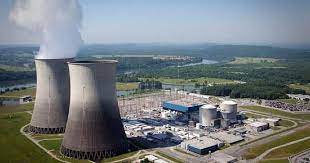

At the Kakrapar Atomic Power Project (KAPP) in Gujarat, India’s first nuclear power reactor of its own design and construction, rated at 700 MW, began commercial operations on Friday, a senior official said.
A senior KAPP official announced: “With great pleasure, this is to inform you that our first indigenous 700 MWe Unit, KAPP-3, has become commercial on June 30, 2023, at 1000 Hrs.”
According to him, the unit is currently functioning at 90% of its maximum power.
At Kakrapar, which already has two 220 MW power plants, the Nuclear Power Corporation of India Limited (NPCIL) is constructing two 700 MW pressurized heavy water reactors (PHWRs).
Numerous commissioning activities were in place at KAPP 4, which, according to officials, had made 96.92% progress by the end of May.
The NPCIL has given financial and administrative approval for the construction of sixteen 700 MW PHWRs around the nation.
At Rawatbhata in Rajasthan (RAPS 7 and 8) and Gorakhpur in Haryana (GHAVP 1 and 2), 700 MW nuclear power plants are being built.
The construction of 10 locally produced PHWRs in fleet mode has been approved by the government for four locations: Gorakhpur in Haryana, Chutka in Madhya Pradesh, Mahi Banswara in Rajasthan, and Kaiga in Karnataka.