

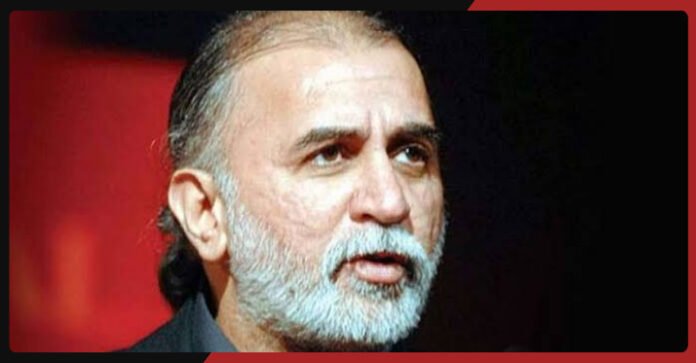

In a significant judicial development, the Bombay High Court has overturned the 2021 acquittal of former Tehelka editor-in-chief Tarun Tejpal in the 2013 sexual assault case, convicting him after allowing an appeal filed by the Goa government. The ruling brings a dramatic turn to a case that has remained under public and legal scrutiny for more than a decade and is widely regarded as one of India’s most high-profile workplace sexual assault cases.
The High Court held that the earlier acquittal by the Goa Sessions Court was not legally sustainable after examining the evidence and arguments presented during the appeal. While the conviction has now been recorded, the question of sentencing is expected to be addressed separately. Tejpal has maintained his innocence throughout the proceedings, and his legal team has indicated that they will challenge the verdict before the Supreme Court.
The allegations date back to November 2013, when a junior colleague accused Tejpal of sexually assaulting her inside a hotel elevator during an event organized by Tehelka in Goa. According to the prosecution, the alleged incidents occurred on two consecutive days while members of the publication were attending the event. The complainant alleged that she was assaulted despite repeatedly refusing Tejpal’s advances.
The allegations created a nationwide debate about sexual harassment in professional spaces, particularly within the media industry. At the time, the incident also sparked discussions about internal workplace mechanisms for handling complaints of sexual misconduct and the responsibility of employers to ensure a safe working environment.
Following the complaint, the Goa Police registered a criminal case and charged Tejpal under various sections of the Indian Penal Code related to rape, sexual assault, and wrongful confinement. Investigators relied on witness statements, electronic communications, CCTV footage, hotel records, and other evidence collected during the investigation.
Tejpal consistently denied the allegations, arguing that the interactions were consensual and asserting that the prosecution had failed to establish guilt beyond reasonable doubt. His defence also questioned aspects of the investigation and the interpretation of evidence presented before the court.
In May 2021, the Goa Sessions Court acquitted Tejpal, observing that the prosecution had failed to prove its case beyond reasonable doubt. The trial court’s judgment generated widespread debate, with several legal experts and women’s rights organisations expressing concerns over portions of the reasoning adopted by the court. The Goa government subsequently challenged the acquittal before the Bombay High Court.
During the appellate proceedings, the state argued that the trial court had misread the evidence, ignored crucial material, and applied incorrect legal standards while evaluating the testimony of the complainant. Prosecutors contended that the acquittal resulted from significant errors in appreciating both factual and legal aspects of the case.
After hearing extensive arguments, the Bombay High Court concluded that the prosecution had successfully established its case and that the acquittal warranted interference. By convicting Tejpal, the court exercised its appellate authority to reassess the evidence and arrive at a different legal conclusion from the trial court.
Legal experts have noted that while appellate courts generally exercise caution in overturning acquittals, they are empowered to do so when a lower court’s findings are found to be legally unsustainable or contrary to the evidence on record.
The complainant’s identity remains protected under Indian law, which prohibits the publication of identifying information in sexual offence cases. The case has continued to attract attention due to the profile of the accused, the long duration of the proceedings, and its broader implications for workplace safety and accountability.
With the High Court’s conviction now on record, attention is expected to shift toward the sentencing proceedings and the anticipated appeal before the Supreme Court. Regardless of the next legal steps, the judgment marks a pivotal moment in one of India’s longest-running and most closely followed criminal cases involving allegations of sexual assault.