

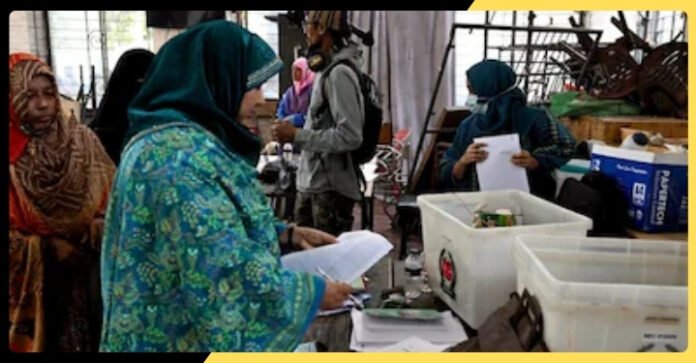

Bangladesh’s 2026 general election was rocked by violence on Tuesday after bomb blasts were reported at two separate polling booths, casting a shadow over an otherwise enthusiastic voter turnout across the country. Authorities confirmed that the explosions occurred in the morning hours, prompting heightened security measures nationwide as millions of citizens continued to cast their ballots.
According to preliminary reports from local law enforcement, the first explosion took place at a polling center in the Chattogram division shortly after voting began at 8:00 a.m. local time. The second blast was reported less than an hour later at a school-turned-polling station in the Khulna region. Officials stated that the devices were low-intensity crude bombs, causing panic among voters but limited structural damage to the facilities.
At least several individuals sustained minor injuries due to the blasts and the ensuing stampede as voters rushed to exit the premises. Emergency services responded swiftly, and the injured were transported to nearby hospitals for treatment. Authorities have not yet confirmed any fatalities.
Election Commission officials emphasized that voting was temporarily suspended at the affected centers but resumed after security sweeps were conducted by bomb disposal units. “We are committed to ensuring that citizens can exercise their democratic rights without fear,” a senior Election Commission spokesperson said during a midday press briefing in Dhaka. “Additional law enforcement personnel have been deployed, and voting continues peacefully in the vast majority of polling stations.”
The 2026 election is considered one of the most closely watched in Bangladesh’s recent history. With key issues such as economic reform, inflation, employment, and governance dominating the campaign trail, political tensions have been high in the weeks leading up to the vote. Major political parties had conducted extensive rallies across the country, drawing large crowds and underscoring the stakes of the contest.
Security had already been tight ahead of polling day, with tens of thousands of police officers, Rapid Action Battalion (RAB) members, and Border Guard Bangladesh (BGB) personnel deployed nationwide. Following the blasts, checkpoints were reinforced, and patrols intensified in urban and rural constituencies alike.
Home Ministry officials condemned the attacks, describing them as “cowardly attempts to destabilize the democratic process.” An investigation has been launched, and intelligence agencies are reviewing CCTV footage and collecting forensic evidence from the blast sites. While no group has immediately claimed responsibility, authorities indicated that they are exploring all possible angles, including political sabotage and extremist involvement.
Despite the incidents, voter turnout appeared robust throughout the day. Long queues were visible outside polling centers in Dhaka, Rajshahi, Sylhet, and Barishal divisions. Many voters expressed determination not to let violence deter them from participating in the democratic process.
“I was frightened when I heard about the explosions,” said Farhana Akter, a first-time voter in Dhaka. “But this is our right. If we stay home out of fear, then those who want to disrupt democracy will succeed.”
Political leaders across party lines condemned the violence and urged supporters to remain calm. The leader of the ruling party called for unity and patience, stating that “isolated acts of violence cannot derail the will of the people.” Meanwhile, opposition leaders demanded a transparent and thorough investigation, alleging that security lapses must be addressed immediately.
Election observers, both domestic and international, are closely monitoring the situation. Representatives from regional observer groups noted that while the blasts are concerning, the broader electoral process appeared orderly in most constituencies as of the afternoon update. “We have seen strong participation and generally peaceful conditions outside the affected areas,” one observer commented.
Analysts say that while sporadic violence has occurred during previous election cycles in Bangladesh, the overall trajectory of the country’s democratic institutions will depend on how authorities respond to such incidents. Quick restoration of voting at the impacted booths and transparent communication from officials may help maintain public confidence.
Social media platforms were flooded with images and videos purportedly showing the aftermath of the explosions. Authorities urged citizens to refrain from spreading unverified information, warning that rumors could inflame tensions. The Bangladesh Telecommunication Regulatory Commission said it was monitoring online activity to prevent misinformation.
Businesses and schools near the affected polling centers were temporarily closed as a precaution. However, by early afternoon, daily activities had begun to resume in most areas. Law enforcement officials stated that no additional threats had been detected but maintained a high alert status.
As polls continued into the late afternoon, election authorities reiterated that voting hours would remain unchanged unless further disruptions occurred. Counting is expected to begin shortly after polls close, with preliminary results anticipated within hours.
The resilience displayed by voters throughout the day underscored the importance of the election in shaping Bangladesh’s political and economic direction for the coming years. For many citizens, participation represented not only a civic duty but also a statement against intimidation.
“Our democracy has faced challenges before,” said political analyst Rezaul Karim. “The critical factor now is institutional response—ensuring accountability, maintaining transparency, and protecting voter confidence.”
As Bangladesh awaits the final turnout figures and eventual results, the focus remains on security, stability, and the integrity of the electoral process. While the bomb blasts have undeniably marred the day, the continued participation of millions suggests a determination among voters to uphold democratic norms despite adversity.