

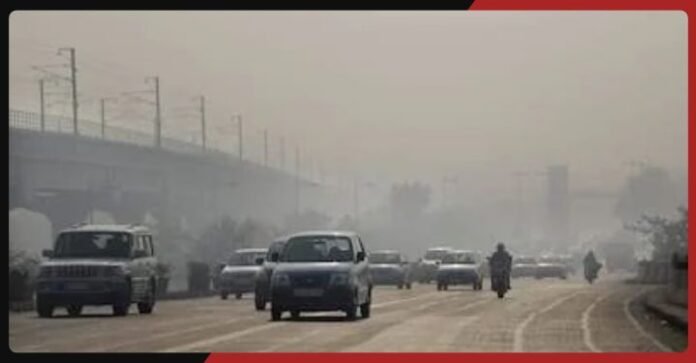

Delhi’s air pollution crisis has intensified with the national capital’s Air Quality Index (AQI) entering the ‘Very Poor’ category for the first time this winter season. In response to the deteriorating air quality, the Commission for Air Quality Management (CAQM) imposed Stage II restrictions under the Graded Response Action Plan (GRAP) across Delhi-NCR with immediate effect on Monday, November 2.
According to official air quality monitoring data, Delhi’s AQI reached 324 at 4 pm, placing it firmly in the very poor category. The development has raised fresh concerns among residents, environmental experts and government authorities as winter pollution begins to affect the national capital.
The AQI scale classifies readings between 301 and 400 as very poor, while readings above 400 fall into the severe category. The latest deterioration indicates that pollution levels are increasing across several parts of Delhi, making stronger preventive measures necessary.
CAQM Activates GRAP Stage II
The CAQM decided to implement GRAP Stage II after reviewing the latest pollution readings and meteorological forecasts provided by the India Meteorological Department (IMD) and the Indian Institute of Tropical Meteorology (IITM).
Under the restrictions, authorities have been directed to intensify pollution-control activities throughout Delhi-NCR. These include regular mechanical sweeping of roads, water sprinkling, the use of anti-smog guns and stronger monitoring of pollution hotspots.
Officials have also been instructed to ensure that dust generated by road construction, demolition and other activities is controlled effectively. Construction sites will face additional inspections to ensure compliance with prescribed environmental guidelines.
The authorities are also expected to take strict action against open burning of garbage, leaves and other waste materials, which contribute to rising pollution levels.
Traffic Management Becomes a Priority
Vehicular emissions remain one of the major contributors to air pollution in Delhi. Under GRAP Stage II, traffic police departments have been directed to improve traffic movement at busy intersections and congested roads.
Authorities will conduct stricter checks on vehicles operating without valid Pollution Under Control Certificates. Vehicles emitting visible smoke may also face enforcement action.
Residents have been encouraged to use public transportation, including buses and metro services, instead of relying on private vehicles for everyday travel. Carpooling has also been recommended to reduce the number of vehicles on the roads.
Pollution Spreads Across Several Areas
The worsening situation is not limited to one particular neighbourhood. Several monitoring stations have recorded very poor air quality.
Areas including RK Puram, Akshardham, ITO, Sirifort, Dwarka, Chandni Chowk and North Campus have reported elevated AQI readings. Jahangirpuri also recorded a reading in the severe category.
The widespread deterioration suggests that pollution has become a citywide concern rather than an isolated problem.
Residents Asked to Take Precautions
Health experts generally advise people to reduce prolonged outdoor exposure when pollution levels enter the very poor category. Children, senior citizens and people with respiratory or heart-related conditions may be particularly vulnerable.
Residents have been advised to avoid unnecessary outdoor exercise, especially near busy roads and pollution hotspots.
The implementation of GRAP Stage II marks an important escalation in Delhi’s winter pollution-control strategy. However, the effectiveness of these measures will depend on strict enforcement and cooperation between government agencies and citizens.
With weather conditions expected to remain unfavourable for pollution dispersion, authorities will continue monitoring the situation closely.