

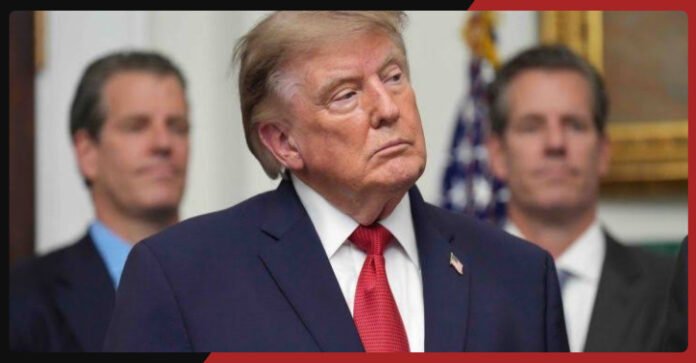

US President Donald Trump has announced a dramatic escalation in Washington’s economic campaign against Iran, warning countries and businesses that continue to provide Tehran with financial, commercial or logistical support that they could face severe economic consequences. Trump described the planned measures as an unprecedented campaign of “economic warfare and isolation,” signaling that the United States intends to increase pressure not only on Iran but also on its international trading partners.
The announcement comes as the broader conflict involving the United States, Israel and Iran approaches its sixth month and diplomatic efforts remain uncertain. According to recent reports, Washington has been increasingly focused on economic pressure as an alternative to immediately expanding military operations. Trump’s latest warning therefore represents a major shift toward using financial restrictions, sanctions and international economic isolation as tools to pressure Tehran.
Trump said countries that provide Iran with what he described as a “lifeline” could face tremendous economic consequences. While he did not provide a complete list of measures, the warning could potentially include secondary sanctions targeting foreign companies, banks, shipping networks and governments that continue conducting business with Iran.
The central objective appears to be weakening Iran’s ability to generate and access foreign currency. Oil exports are particularly important because petroleum revenues represent a major source of income for Tehran. Washington has previously attempted to reduce Iranian oil exports through sanctions and enforcement actions. The latest campaign could expand those efforts by targeting the international networks that allow Iranian oil and other goods to reach global markets.
The threat could have significant consequences for countries that maintain commercial relations with Iran. China, in particular, is a major concern for Washington because it remains an important buyer of Iranian oil. Any attempt to impose aggressive secondary sanctions on Chinese companies or financial institutions could create a new confrontation between Washington and Beijing.
Other countries could also find themselves under pressure. Businesses involved in shipping, insurance, banking, energy trading and logistics could face difficult choices if Washington increases enforcement. Companies may have to decide whether maintaining Iranian business is worth risking access to the US financial system.
The situation is also closely connected to the Strait of Hormuz, one of the world’s most important energy routes. Disruption in the waterway has already created concerns about oil supplies and global markets. The United States has been working with partners to maintain commercial shipping, while Iran continues to exert influence over the strategic waterway.
Iran has rejected Trump’s pressure campaign. Iranian Foreign Minister Abbas Araqchi described the US approach as economic terrorism and argued that American threats would not force Tehran into surrender. Iran has indicated that it remains open to dialogue, but it rejects negotiations conducted under what it considers excessive pressure.
The latest US warning therefore creates a difficult diplomatic environment. Washington wants to demonstrate that Iran will face increasing costs if it refuses to compromise, while Tehran appears determined to resist what it views as coercion.
For global markets, the consequences could extend beyond the Middle East. Stricter sanctions could affect oil supplies, shipping costs, insurance premiums and international trade. If major Iranian trading partners become targets of US penalties, the dispute could also develop into a broader economic confrontation.
Trump’s announcement has consequently raised the stakes considerably. Instead of limiting economic pressure to Iranian entities, Washington is now signaling that countries helping Tehran could themselves become targets. Whether the strategy succeeds in forcing Iran back toward negotiations or instead deepens international divisions remains one of the most important questions facing the global economy and Middle Eastern diplomacy.