

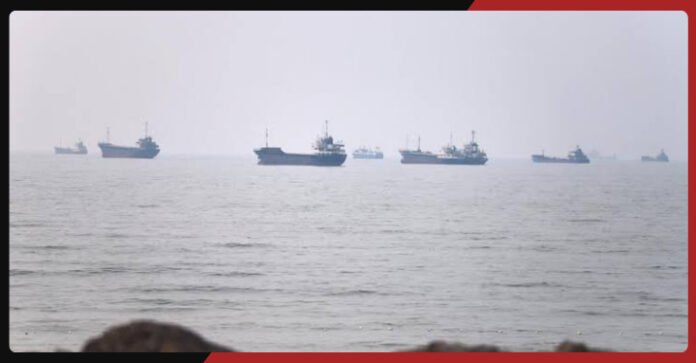

The Middle East may be on the verge of a significant diplomatic breakthrough as Iran announced that its long-discussed agreement with Oman regarding the Strait of Hormuz has entered its final stage. The development comes at a time when former U.S. President Donald Trump has hinted at positive progress in regional diplomacy, raising hopes that one of the world’s most strategically important waterways could witness greater stability in the coming months.
The Strait of Hormuz is among the busiest and most vital maritime trade routes in the world. Nearly one-fifth of global oil shipments pass through this narrow passage connecting the Persian Gulf with the Gulf of Oman and the Arabian Sea. Any disruption in the region has immediate consequences for international energy markets, global shipping, and geopolitical relations. For years, tensions involving Iran, the United States, and Gulf nations have kept the strait under constant international scrutiny.
Iranian officials stated that negotiations with Oman have progressed substantially and that only a few technical and administrative issues remain before the agreement is finalized. Although the complete details of the proposed arrangement have not yet been made public, officials indicated that the pact aims to strengthen maritime cooperation, improve navigation safety, enhance regional security, and facilitate smoother commercial shipping through the strategically important waterway.
Oman has long played the role of a neutral mediator in Middle Eastern diplomacy. Unlike several regional powers that have often been directly involved in conflicts, Oman has maintained balanced relations with both Iran and Western nations. Over the years, Muscat has quietly hosted numerous back-channel discussions that have helped reduce tensions between rival governments. Its diplomatic credibility has made it a trusted partner in facilitating dialogue during periods of heightened regional uncertainty.
The latest announcement has attracted worldwide attention because of its potential implications for international trade and energy security. If successfully concluded, the agreement could reduce the risk of military incidents in one of the world’s most sensitive maritime corridors. Shipping companies, oil exporters, insurance providers, and global financial markets are closely monitoring developments, as greater stability in the Strait of Hormuz could lower transportation costs and reduce geopolitical risks.
Former U.S. President Donald Trump also contributed to growing optimism by suggesting that a breakthrough in regional diplomacy may be within reach. While he did not reveal specific details about the negotiations, his remarks fueled speculation that indirect diplomatic efforts involving several regional and international stakeholders may be progressing behind the scenes. Trump’s comments have drawn significant attention because of his administration’s previous “maximum pressure” policy toward Iran, which had resulted in heightened tensions and several confrontations in the Gulf region.
Political analysts believe that both Iran and Oman have strong incentives to finalize the agreement. Iran seeks greater economic stability following years of sanctions and regional isolation, while Oman hopes to reinforce its position as a key diplomatic bridge capable of promoting peace and regional cooperation. Improved maritime security would also benefit neighboring Gulf countries whose economies depend heavily on uninterrupted energy exports.
Energy experts note that any agreement ensuring safer passage through the Strait of Hormuz could have a positive effect on global oil markets. Even small signs of reduced geopolitical tension often influence crude oil prices, shipping insurance premiums, and investor confidence. Countries across Asia, Europe, and North America rely heavily on oil transported through the strait, making regional stability an international economic priority.
Security remains a major concern in the region. Over the past decade, the Strait of Hormuz has witnessed multiple incidents involving tanker seizures, drone attacks, naval confrontations, and allegations of sabotage. These events have repeatedly raised fears of broader military conflict that could disrupt global energy supplies. A formal agreement between Iran and Oman focusing on maritime coordination may help establish clearer communication mechanisms and reduce the possibility of accidental confrontations.
International observers have welcomed the latest diplomatic progress with cautious optimism. Many experts emphasize that while political agreements are important, their success ultimately depends on effective implementation and continued cooperation among regional stakeholders. Confidence-building measures, transparent communication, and adherence to international maritime law will be essential for ensuring the long-term success of any agreement.
The broader geopolitical context also plays an important role. The Middle East has experienced significant diplomatic shifts in recent years, including renewed dialogue between regional rivals and efforts to normalize relations across the Gulf. Countries increasingly recognize that prolonged instability threatens economic growth, foreign investment, and regional development. Against this backdrop, cooperative agreements focused on maritime security are viewed as practical steps toward reducing tensions.
For Oman, the agreement further strengthens its reputation as a trusted mediator capable of facilitating dialogue even among adversaries. The country’s consistent policy of neutrality has allowed it to maintain constructive relationships with diverse regional and international actors. This diplomatic approach has often produced quiet but meaningful progress during periods when public negotiations appeared impossible.
Meanwhile, global shipping companies and energy traders continue to await official confirmation of the agreement’s final provisions. Industry experts expect that any measures improving navigational safety, communication protocols, and crisis management could significantly enhance confidence among commercial operators using the Strait of Hormuz.
Although challenges remain before the agreement is formally signed, the announcement marks an encouraging step toward greater regional cooperation. If finalized successfully, the Iran-Oman Hormuz agreement could contribute to improved maritime security, stronger diplomatic engagement, and enhanced stability in one of the world’s most strategically significant waterways. As governments and international markets closely monitor the negotiations, hopes remain high that diplomacy may succeed in reducing tensions and securing safer passage through this critical global trade corridor.