

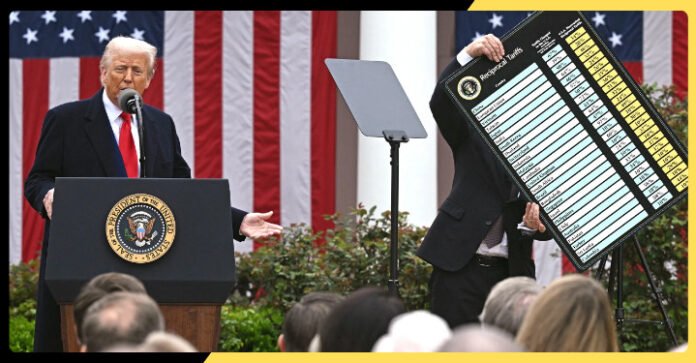

A fresh legal showdown has erupted in the United States after a coalition of 25 states filed a lawsuit against the Trump administration over its latest round of import tariffs. The states argue that the administration exceeded its legal authority by imposing broad duties on goods imported from dozens of U.S. trading partners, despite previous court rulings limiting similar actions. The lawsuit has once again placed the administration’s trade agenda under intense judicial scrutiny and could reshape the future of presidential powers over international commerce.
The lawsuit was filed before the U.S. Court of International Trade, a federal court that specializes in disputes involving customs laws and international trade regulations. According to the complaint, the administration introduced tariffs ranging from 10% to 12.5% on imports from around 60 countries and territories. Officials defended the move by stating that the tariffs are necessary to combat unfair trade practices and address concerns related to forced labor in global supply chains.
However, the coalition of states strongly disputes that justification. Attorneys general representing the states argue that the administration is attempting to revive broad tariff policies that had previously been rejected by the courts. They claim that while the White House has cited a different legal authority this time, the practical effect is nearly identical to earlier measures that judges found exceeded presidential authority.
The plaintiffs also contend that the tariffs violate established legal procedures. They argue that the administration did not meet the statutory requirements necessary before imposing such wide-ranging duties. According to the lawsuit, Congress—not the executive branch—holds primary constitutional authority over trade policy, and any expansion of presidential tariff powers must remain within limits established by federal law.
State officials warn that the new tariffs could have significant economic consequences. Many industries rely heavily on imported raw materials, machinery, and consumer goods. Increased import duties are expected to raise production costs for manufacturers, increase expenses for retailers, and ultimately result in higher prices for American consumers.
Small businesses are expected to be among the hardest hit. Unlike larger corporations, many smaller companies have limited ability to absorb higher import costs or quickly shift to alternative suppliers. Business organizations in several states have already expressed concerns that the tariffs could reduce profits, slow hiring, and create additional financial pressure during a period of economic uncertainty.
The Trump administration, meanwhile, insists that its actions are lawful and necessary to protect American economic interests. Officials argue that several trading partners continue to engage in unfair commercial practices that disadvantage U.S. businesses and workers. They also maintain that addressing forced labor concerns requires stronger enforcement measures, including the use of tariffs as an economic tool.
Supporters of the administration believe the policy could encourage companies to manufacture more products within the United States. They argue that reducing dependence on foreign imports may strengthen domestic industries, create jobs, and improve long-term economic security. Administration officials have repeatedly defended tariffs as an effective negotiating tool in international trade disputes.
Critics, however, argue that tariffs function as an indirect tax on American consumers. Numerous economists have pointed out that import duties are generally paid by U.S. importers, who often pass those additional costs along through higher retail prices. As a result, families purchasing everyday goods—from electronics and clothing to household appliances—may ultimately bear much of the financial burden.
Trade analysts note that the legal dispute could establish an important precedent regarding executive authority over international trade. Previous court decisions have already placed limits on the use of emergency powers to impose tariffs. This latest case will likely examine whether presidents can rely on alternative statutory authorities to implement similar trade restrictions after earlier measures have been struck down.
Legal experts expect extensive arguments over congressional intent, administrative procedure, and the specific language of federal trade laws. Because international trade affects virtually every sector of the American economy, the outcome of the case may influence future administrations regardless of political party.
If the Court of International Trade rules against the administration, officials are widely expected to appeal the decision to higher federal courts. The dispute could eventually reach the U.S. Supreme Court, where judges may once again be asked to define the limits of presidential trade powers.
For now, the lawsuit represents one of the most significant legal challenges to the Trump administration’s economic agenda. As both sides prepare for a lengthy court battle, businesses, investors, and international trading partners will be watching closely, knowing that the final decision could shape U.S. trade policy for years to come.