

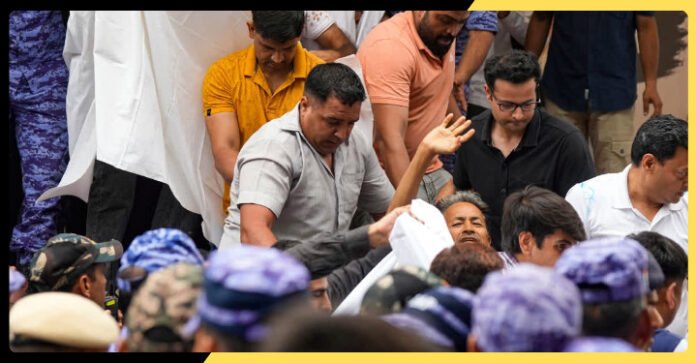

Climate activist and education reform advocate Sonam Wangchuk was shifted to Delhi’s Safdarjung Hospital on Saturday after his health reportedly deteriorated during the 21st day of his indefinite hunger strike. Authorities said the decision was taken following medical advice and in compliance with directions from the Delhi High Court, while supporters of Wangchuk alleged that he was removed from the protest site against his wishes.
Wangchuk had been observing the hunger strike at Jantar Mantar in New Delhi, where he joined an ongoing protest demanding accountability over alleged examination irregularities and broader education reforms. The protest has drawn students, teachers, activists, and supporters from different parts of the country, making it one of the most closely watched public demonstrations in recent weeks.
According to Delhi Police, Wangchuk’s health had weakened significantly after nearly three weeks without solid food. Officials stated that doctors advised immediate hospitalization to prevent further complications. Police also rejected allegations of excessive force, maintaining that the transfer was carried out solely to ensure the activist received proper medical care.
Hospital authorities later confirmed that Wangchuk was stable but remained weak due to prolonged fasting and dehydration. Doctors said he would remain under continuous medical observation while undergoing treatment to stabilize his condition.
However, the manner in which Wangchuk was moved sparked sharp criticism from his supporters and protest organizers. Several protesters claimed that police personnel entered the protest site early in the morning and escorted the activist away despite objections from those present. Videos circulating on social media appeared to show emotional scenes as supporters gathered around Wangchuk before he was taken to the hospital, although authorities disputed claims of a forceful crackdown.
Following Wangchuk’s hospitalization, CJP founder Abhijeet Dipke announced that he would begin an indefinite hunger strike in solidarity with the activist and to continue the movement’s demands. Dipke stated that the protest would not end with Wangchuk’s hospitalization and urged supporters to remain peaceful while continuing their campaign. He also said that the proposed “Chalo Sansad” march would proceed as scheduled.
The developments have intensified the political debate surrounding the protest. Opposition leaders questioned the government’s handling of the demonstration and demanded greater transparency regarding Wangchuk’s medical condition and the circumstances of his removal from the protest site. Government authorities, meanwhile, maintained that protecting the activist’s health was their primary responsibility and emphasized that medical intervention became necessary after doctors expressed concern over his deteriorating condition.
Wangchuk, widely known for his work in education, sustainable development, and environmental innovation, has built a large following over the years through his advocacy for educational reform and climate action. His participation in the hunger strike significantly increased public attention on the ongoing movement, with thousands of supporters expressing solidarity both at the protest site and across social media platforms.
As of Saturday evening, doctors continued monitoring Wangchuk’s health, while supporters gathered outside the hospital and at Jantar Mantar, demanding that the government engage in dialogue with protest leaders. The situation remains fluid, with further announcements expected from both protest organizers and government officials in the coming days. Whether Wangchuk resumes public participation after recovering or the movement enters a new phase under other leaders, the developments have ensured that the protest remains at the center of national attention.