

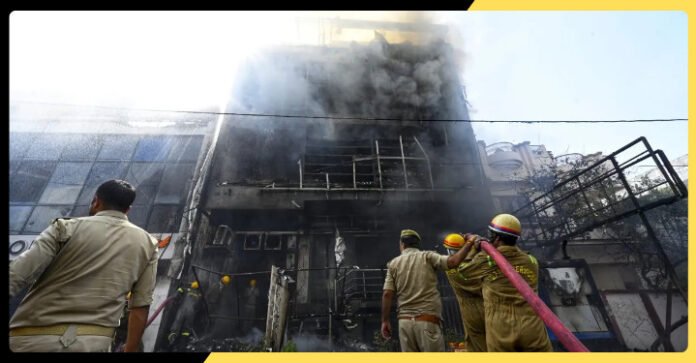

The devastating fire that engulfed a commercial building in Lucknow has once again brought the issue of urban safety and regulatory oversight into sharp focus. As emergency responders battled flames and smoke for hours, attention quickly shifted from the immediate tragedy to the larger questions surrounding building approvals, fire safety compliance, and the role of the local development authority.
Residents and business owners expressed shock over the scale of the incident. Eyewitnesses described scenes of panic as occupants attempted to escape through smoke-filled corridors while firefighters struggled to gain access to critical sections of the structure. The incident highlighted how quickly a routine day can turn into a life-threatening emergency when safety mechanisms fail or are absent.
Initial reports suggest that investigators are examining whether the building adhered to mandatory fire safety regulations. Questions have emerged regarding the availability of emergency exits, functioning fire alarms, smoke detectors, and firefighting equipment. Experts note that even modern buildings can become death traps if safety systems are neglected or if unauthorized modifications compromise evacuation routes.
The development authority now finds itself under intense scrutiny. Critics argue that regulatory agencies are responsible not only for approving building plans but also for ensuring continued compliance through periodic inspections. If deficiencies existed, many are asking why they were not identified and corrected before disaster struck.
Urban planning specialists have long warned that rapid commercial expansion often outpaces enforcement mechanisms. In many growing cities, buildings undergo alterations after receiving approval, creating discrepancies between sanctioned plans and actual structures. Such changes can significantly increase fire risks and complicate rescue operations during emergencies.
The Lucknow fire has also renewed debate about accountability. Residents are demanding transparency regarding inspection records, safety certifications, and occupancy permissions. Civic groups argue that public access to such information could encourage better compliance and allow citizens to make informed decisions about the spaces they occupy.
Emergency response teams deserve recognition for their efforts under difficult conditions. Firefighters worked tirelessly to contain the blaze and prevent it from spreading to adjacent structures. However, experts emphasize that emergency response alone cannot compensate for inadequate prevention measures.
The tragedy serves as a reminder that fire safety is a shared responsibility involving property owners, tenants, regulators, and enforcement agencies. Regular audits, strict penalties for violations, and public awareness campaigns are essential components of a comprehensive safety framework.
As investigations continue, the findings could have implications far beyond a single building. Authorities may face increasing pressure to review existing approvals, conduct large-scale inspections, and strengthen enforcement procedures across the city. Such measures could help prevent similar incidents and restore public confidence in regulatory systems.
For many residents, the central question remains simple: could this disaster have been prevented? The answer will depend on the evidence uncovered in the coming weeks. What is already clear, however, is that the fire has exposed vulnerabilities that demand urgent attention. The lessons learned from this incident must translate into meaningful reforms if future tragedies are to be avoided.