

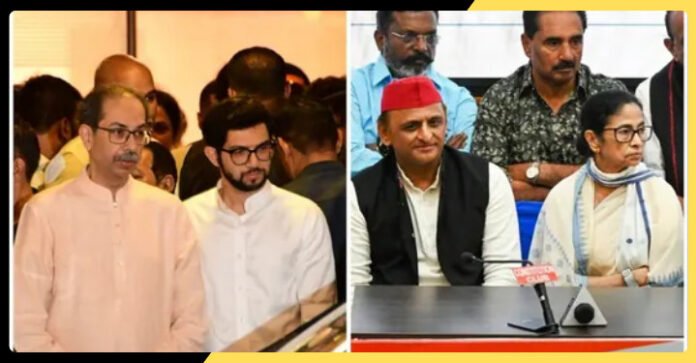

The political turbulence within opposition parties is increasingly becoming a factor in shaping parliamentary dynamics. Recent signs of discontent within the Trinamool Congress (TMC) and Shiv Sena (UBT) have sparked discussions about whether the National Democratic Alliance (NDA) could emerge as an indirect beneficiary of these internal rebellions.
Parliamentary politics often depends not only on election results but also on party unity. When opposition parties experience internal divisions, the ruling alliance gains strategic advantages during legislative debates, voting on bills, and discussions on key national issues. The current unrest in TMC and Shiv Sena (UBT) reflects a broader challenge faced by opposition parties attempting to maintain cohesion after a hard-fought electoral season.
In the case of TMC, reports of dissatisfaction among certain leaders have raised concerns about the party’s ability to maintain a united front. While no major split has officially materialized, even a handful of dissenting voices can affect parliamentary coordination. The party has traditionally maintained strong discipline, but growing ambitions among regional leaders and differences over political strategy have created occasional friction.
Similarly, Shiv Sena (UBT) continues to grapple with the aftereffects of the split that transformed Maharashtra politics. The party’s leadership has worked to rebuild organizational strength, but lingering dissatisfaction among some leaders remains a challenge. Any further erosion in the party’s parliamentary strength could weaken opposition unity on national issues.
For the NDA, the benefits may not necessarily come through direct defections. Instead, reduced opposition coordination can make it easier for the government to secure support for legislation. In Parliament, attendance, voting patterns, and issue-based alignments often determine outcomes. If opposition members abstain or remain divided, the ruling alliance gains an advantage even without expanding its formal numbers.
The Rajya Sabha presents a particularly important arena. Since the upper house does not always mirror Lok Sabha numbers, every vote carries significance. Fragmentation among opposition parties can reduce resistance to government proposals and improve the NDA’s ability to manage legislative business.
Political analysts note that opposition parties face a delicate balancing act. On one hand, they must project unity against the ruling alliance. On the other, they must accommodate diverse regional interests and leadership aspirations. Failures in managing these competing demands can lead to internal rebellions that weaken collective bargaining power.
The coming months will reveal whether the current tensions remain isolated incidents or develop into larger organizational challenges. Much will depend on how party leaderships address grievances and maintain discipline. If discontent grows, the NDA could find itself operating in a more favorable parliamentary environment.
Ultimately, parliamentary arithmetic is influenced by more than election victories. Internal party stability, leadership credibility, and strategic coordination often determine legislative success. The ongoing developments within TMC and Shiv Sena (UBT) highlight how political numbers can shift even without formal changes in government or opposition strength.