

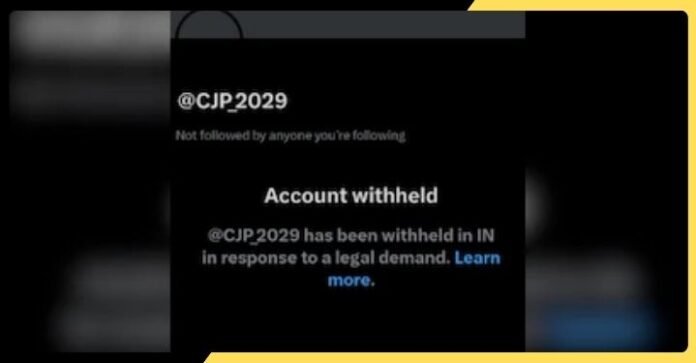

The social media satire scene in India witnessed another major flashpoint after the X account of the controversial parody platform “Cockroach Janata Party” was reportedly blocked in India. The development was announced by the founder of the account, who claimed that access to the handle had suddenly been restricted for Indian users without prior warning. The incident has reignited debates over online censorship, political satire, and freedom of expression in the digital age.
The “Cockroach Janata Party” account had gained popularity over the past several months for posting satirical political commentary, memes, and humorous takes on current affairs. With a name clearly designed to parody mainstream political branding, the page attracted a large following among young social media users who appreciated its sharp wit and provocative humor. However, critics frequently accused the account of crossing the line between satire and targeted political attacks.
According to the founder, users in India began receiving notifications that the account had been “withheld in response to a legal demand.” Screenshots of the notice quickly spread across social media, sparking outrage among supporters who described the move as an attack on democratic discourse. The founder alleged that the action was politically motivated and intended to silence voices critical of powerful institutions.
The blocking of parody and satire accounts has become a recurring issue globally, particularly in countries where online political conversations are highly polarized. In India, social media has increasingly become a battleground for ideological debates, with meme pages and parody handles often playing a significant role in shaping narratives. Supporters of the account argued that satire has historically been an important democratic tool used to challenge authority and expose hypocrisy.
Political observers noted that the account’s popularity stemmed from its ability to connect complex political developments with relatable humor. Many of its posts went viral within minutes, often becoming part of larger online discussions. Some posts mocked politicians across party lines, while others focused on broader issues such as inflation, unemployment, and internet censorship.
At the same time, critics of the page argued that certain content promoted misinformation under the guise of comedy. They claimed that parody pages can influence public opinion without accountability, especially when viral posts blur the line between fact and fiction. Several commentators called for stricter regulation of anonymous political content online.
The founder of “Cockroach Janata Party” denied accusations of misinformation and insisted the page clearly operated as satire. In a public statement, the founder said satire should not be treated as a threat to democracy. Supporters echoed the sentiment, arguing that democracies must tolerate criticism and humor, even when uncomfortable.
The incident has also renewed scrutiny on X’s content moderation policies in India. The platform has previously faced criticism from activists and legal experts regarding compliance with government requests. While companies operating in India are required to follow local laws, digital rights advocates argue that excessive compliance may weaken free speech protections.
Legal experts say withholding an account usually means access is restricted only within a specific country, while the account remains visible elsewhere. Such actions are generally taken following legal notices or government directives. However, the exact reason behind the blocking remains unclear, as neither Indian authorities nor X issued a detailed public explanation immediately after the controversy erupted.
As reactions continue pouring in, the controversy surrounding “Cockroach Janata Party” highlights the growing tension between online satire and regulatory control. For many users, the episode represents more than just the blocking of a parody account — it symbolizes the broader struggle over who gets to shape political conversations in the digital era.