

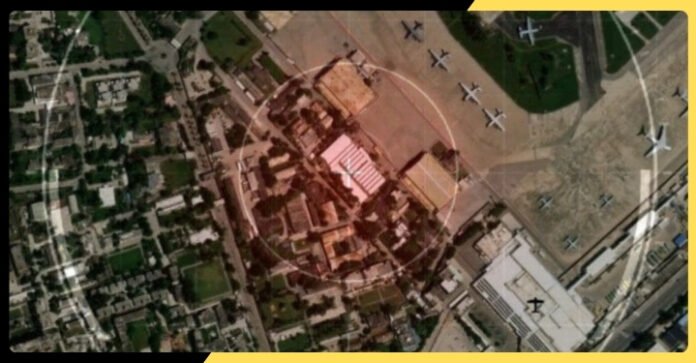

Militants affiliated with the Pakistani Taliban carried out a series of coordinated attacks on multiple military installations across Pakistan, with the strategically significant Nur Khan Airbase in Rawalpindi reportedly among the targets. The assaults mark one of the most high-profile security breaches in recent months, raising concerns about escalating militant capabilities and the resilience of Pakistan’s defense infrastructure.
Tehrik-i-Taliban Pakistan (TTP), often referred to as the Pakistani Taliban, has intensified operations in various regions following the collapse of its ceasefire agreement with the government. Security officials said heavily armed militants attempted to breach fortified perimeters using a combination of small arms fire, improvised explosive devices, and coordinated diversionary tactics.
The targeting of Nur Khan Airbase is particularly significant. Located in Rawalpindi, adjacent to the capital Islamabad, the airbase serves as a key logistical and operational hub for the Pakistan Air Force. It has historically been associated with VIP transport, strategic airlift operations, and military coordination activities. Its proximity to major military headquarters amplifies the symbolic weight of the attack.
Military sources indicated that security forces responded swiftly, engaging the attackers in a prolonged firefight. Initial reports suggest that several militants were neutralized before they could inflict substantial structural damage. However, the psychological and strategic implications of breaching the outer defenses of such a high-security installation are considerable.
Elsewhere, other military checkpoints and bases in Khyber Pakhtunkhwa and Balochistan provinces also came under attack, suggesting a synchronized campaign designed to stretch security resources thin. Analysts believe the objective may have been to demonstrate operational reach and undermine public confidence in state security mechanisms.
In recent years, Pakistan has experienced a resurgence of militant violence, particularly in its northwestern regions bordering Afghanistan. The return of the Afghan Taliban to power in Kabul in 2021 has altered regional dynamics, with Islamabad repeatedly urging Afghan authorities to prevent cross-border militant activity. The TTP, ideologically aligned but organizationally distinct from the Afghan Taliban, has exploited the shifting security landscape to regroup and reorganize.
Government officials condemned the attacks as acts of terrorism aimed at destabilizing the country. They reiterated their commitment to eradicating militancy through intelligence-based operations and coordinated counterterrorism strategies. A high-level security meeting was convened shortly after the incidents to assess vulnerabilities and reinforce protective measures at sensitive installations nationwide.
Security experts warn that attacks on strategic military assets serve multiple purposes for militant groups: they generate media attention, boost recruitment narratives, and signal defiance against state authority. Even failed attempts can be portrayed as symbolic victories.
While authorities maintain that the situation is under control, the coordinated nature of the assaults underscores persistent security challenges. As investigations continue, the focus remains on identifying logistical networks and potential facilitators who enabled the attackers to plan and execute such complex operations.
The events are likely to influence Pakistan’s internal security posture in the coming months, potentially prompting expanded counterterrorism operations and stricter surveillance measures across high-risk regions.