

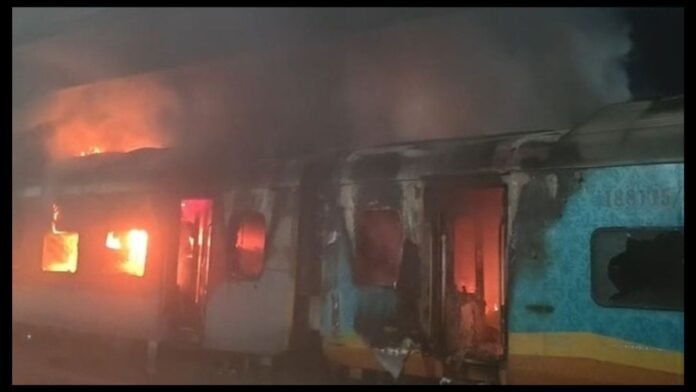

A devastating fire aboard a passenger train in Andhra Pradesh turned a routine journey into a nightmare, as two coaches caught fire, leading to the death of one passenger and triggering a massive emergency evacuation involving 158 people. The incident has raised fresh concerns about fire safety and emergency preparedness on long-distance trains.
The fire reportedly broke out suddenly, catching passengers off guard. Within moments, flames spread across two coaches, filling the compartments with smoke and forcing travelers to flee for their lives. Panic gripped the train as passengers scrambled to escape, some breaking windows to get fresh air while others jumped onto the tracks to avoid being trapped.
Railway staff acted swiftly after receiving alerts from passengers. The train was stopped, and emergency measures were initiated to prevent the fire from spreading to other coaches. Local residents and police personnel were among the first to reach the site, assisting passengers before fire services arrived.
Despite the quick response, one passenger lost their life in the incident. Officials said the victim may have been trapped or critically injured during the initial moments of the fire. Several others suffered minor injuries and were taken to nearby hospitals for observation and treatment.
“The situation was terrifying,” recalled a passenger traveling with family. “The smoke was so thick we could barely see. People were shouting for help, and everyone was trying to get out as fast as possible.” Passengers praised the efforts of fellow travelers and railway staff who helped children, senior citizens, and injured individuals evacuate safely.
Firefighters battled the blaze for over an hour before bringing it under control. The two affected coaches were completely charred, resulting in significant property damage. Railway officials confirmed that no hazardous materials were being transported in the train at the time of the incident.
A preliminary assessment points toward an electrical fault as the possible cause of the fire. However, authorities have not ruled out other possibilities, including equipment failure or external factors. A high-level investigation has been ordered to determine the exact cause and assess whether safety standards were adequately followed.
In response to the incident, Indian Railways announced immediate inspections of similar coach models operating on the same route. Officials emphasized that recent upgrades have included fire-resistant interiors and improved electrical systems, but acknowledged that continuous vigilance is essential given the scale of railway operations.
The accident caused significant disruption to rail services, with multiple trains delayed as emergency crews worked to clear the tracks. Passengers affected by the delays were provided with food, water, and alternative travel arrangements where possible.
Political leaders and public officials expressed sorrow over the tragedy. Condolences poured in from across the state, with assurances that the bereaved family would receive compensation and support. Authorities also directed railway hospitals to provide free medical care to the injured.
Safety advocates have renewed calls for enhanced fire detection technology, regular mock drills, and better passenger awareness. They argue that while infrastructure improvements are important, training staff and educating passengers on emergency responses can significantly reduce casualties during such incidents.
As the investigation continues, the incident serves as a stark reminder of the risks associated with rail travel and the importance of strict safety compliance. Railway authorities have pledged transparency in the inquiry and committed to implementing all necessary recommendations to prevent similar tragedies in the future.