

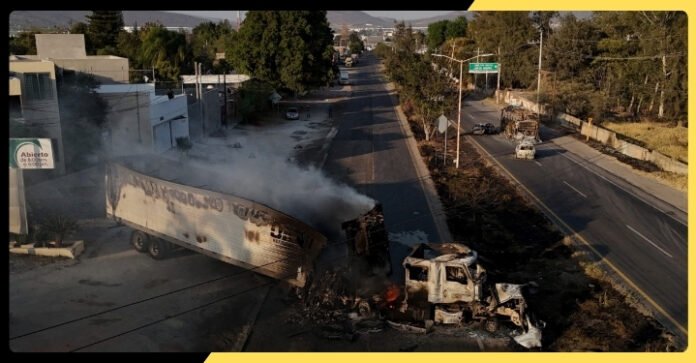

The killing of a powerful drug cartel leader has sent shockwaves across the country, prompting widespread school closures and urgent safety advisories as authorities prepare for possible retaliatory violence. In several cities, streets that are normally bustling with activity have fallen eerily quiet, with residents heeding government warnings to remain indoors.
Officials confirmed that the cartel figure was killed during a targeted security operation carried out by federal forces. The operation, described as swift but intense, reportedly involved coordinated ground and aerial units. While authorities hailed the mission as a significant victory against organized crime, they also acknowledged the heightened risk of reprisals from loyalists seeking revenge.
Within hours of the announcement, local governments in affected regions suspended classes in both public and private schools. Parents were notified through emergency alerts, and many businesses chose to close their doors preemptively. Public transportation services in some municipalities were reduced or temporarily halted as a precautionary measure.
Security analysts warn that the death of a high-ranking cartel leader often creates a volatile power vacuum. Rival factions may attempt to seize control of lucrative trafficking routes, leading to violent turf battles. At the same time, remaining members of the fallen leader’s organization may launch coordinated attacks against security forces or public institutions to demonstrate continued strength.
Residents described a palpable sense of fear as rumors circulated on social media about possible roadblocks, arson attacks, and armed convoys. Authorities urged the public not to spread unverified information, emphasizing the importance of relying on official updates. Law enforcement agencies increased patrols, set up checkpoints, and deployed additional troops to strategic areas, including highways and commercial districts.
Government officials defended the operation, arguing that dismantling cartel leadership is essential to restoring long-term security. “We will not allow criminal groups to operate with impunity,” one spokesperson stated during a press conference. “Our priority is the safety of citizens, and we are taking all necessary measures to prevent further violence.”
Despite these assurances, many families remain anxious. Some residents have stocked up on groceries and essential supplies, preparing for the possibility of prolonged unrest. In certain neighborhoods, community groups organized informal communication networks to share verified information and coordinate support for vulnerable individuals.
The economic impact is also beginning to show. Local business owners fear that even a short period of instability could hurt sales and disrupt supply chains. Tourism operators, already sensitive to security concerns, worry that images of armed patrols and shuttered schools may deter visitors in the coming weeks.
Human rights advocates have called for transparency in the aftermath of the operation. While acknowledging the need to confront organized crime, they stress that security efforts must be conducted within the bounds of the law. Independent investigations and clear communication, they argue, are vital to maintaining public trust.
Meanwhile, federal authorities are closely monitoring intelligence reports for signs of coordinated retaliation. Military helicopters have been seen patrolling above key urban centers, while armored vehicles guard government buildings and critical infrastructure.
Experts note that cartel structures are often resilient, with established chains of command that allow operations to continue even after a leader’s death. However, internal divisions can quickly surface, potentially intensifying violence in the short term.
For many citizens, the immediate concern is simple: staying safe. Parents are keeping children at home, and neighborhoods that once echoed with the sounds of daily life remain subdued. Whether the current calm represents successful prevention or merely the quiet before further unrest remains uncertain.
As the nation watches closely, authorities face the delicate task of balancing decisive enforcement with community reassurance. The coming days will likely determine whether the killing marks a turning point in the fight against organized crime—or sparks another chapter of instability.