

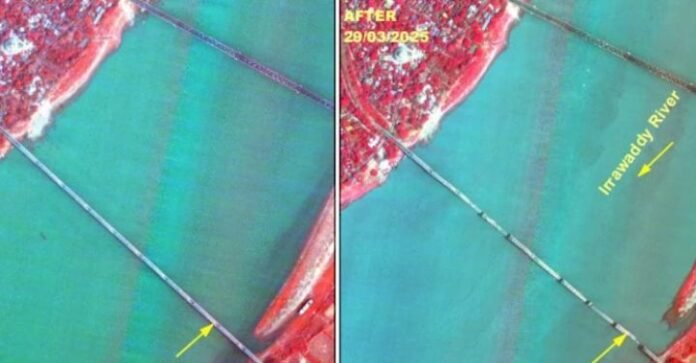

Myanmar experienced a powerful earthquake that devastated large portions of the country, leaving millions in shock and disarray. The earthquake, which measured 7.8 on the Richter scale, struck central Myanmar and caused widespread damage. To better understand the extent of the devastation, the Indian Space Research Organisation (ISRO) utilized its cutting-edge satellite imagery to capture the scale of destruction in real-time.
ISRO’s high-resolution satellites, such as Cartosat and Resourcesat, played a pivotal role in providing accurate and clear images of the affected areas. These images revealed the collapse of residential buildings, roads, bridges, and vital infrastructure, particularly in Myanmar’s capital city, Naypyidaw, and the surrounding regions. The satellite images also indicated areas of landslides and soil liquefaction that have made rescue and recovery operations particularly challenging.
Destruction Overview:
- Urban areas: Satellite images from ISRO’s Cartosat-2 captured clear indications of widespread destruction to residential areas. Buildings have collapsed in significant urban hubs, including Mandalay, Myanmar’s second-largest city, and Bagan, a UNESCO heritage site. Many of the structures, particularly in older cities, were unable to withstand the tremors, leading to catastrophic damage. ISRO’s images also showed large-scale displacement of people, who were seen huddled in makeshift shelters, while emergency response teams worked to clear rubble.
- Infrastructure damage: Key infrastructure, including bridges and roads, appeared heavily damaged in the satellite images. Several highways and key transport routes had become impassable due to broken roads and the falling of bridges, complicating aid delivery. ISRO’s satellite data helped identify the most affected regions and provided crucial details for the deployment of rescue teams.
Satellite Insights and Strategic Aid Planning:
The ISRO satellite images have provided valuable insight to aid agencies and emergency responders. By identifying which regions were hardest hit, the images enabled targeted intervention, such as dropping emergency supplies by air to remote regions where access by ground was blocked.