

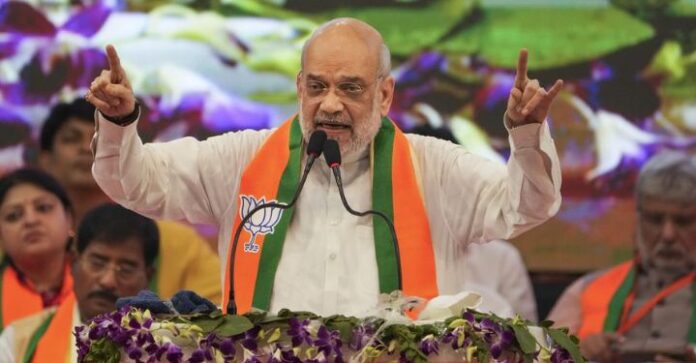

In a significant political development, Union Home Minister Amit Shah has declared that Mamata Banerjee’s tenure as Chief Minister of West Bengal will conclude in 2026, with the Bharatiya Janata Party (BJP) poised to form the next government in the state. Shah’s assertion underscores the BJP’s strategic focus on West Bengal as a critical battleground in the upcoming elections.
Amit Shah’s Critique of Mamata Banerjee’s Governance
During a recent rally in Murshidabad, Shah launched a scathing critique of the Trinamool Congress (TMC) government, accusing it of fostering corruption, mismanagement, and communal appeasement. He alleged that the TMC’s policies had compromised the state’s integrity and security. Shah’s comments reflect the BJP’s intent to challenge Mamata Banerjee’s leadership and present itself as a viable alternative to the TMC.
BJP’s Strategy for West Bengal
The BJP has set an ambitious target of securing 35 Lok Sabha seats in West Bengal, aiming to dislodge the TMC from power. Shah emphasized that the BJP’s success in the state would ensure a halt to infiltration and restore law and order, drawing parallels with the party’s governance in Assam. He also highlighted the BJP’s commitment to eradicating corruption and promoting development in the region.
TMC’s Response to Amit Shah’s Allegations
The TMC swiftly responded to Shah’s accusations, with party leaders denouncing his statements as baseless and politically motivated. They criticized Shah for using inflammatory language and attempting to create divisions within the state. The TMC reiterated its commitment to serving the people of West Bengal and dismissed the BJP’s claims as part of an election strategy.
Implications for West Bengal’s Political Landscape
Shah’s remarks have intensified the political discourse in West Bengal, setting the stage for a contentious electoral battle. The BJP’s focus on issues like infiltration, corruption, and governance contrasts with the TMC’s emphasis on regional identity and development. As the 2026 elections approach, the contest between these two major parties is expected to be fierce, with both sides mobilizing their support bases and resources.
Conclusion
Amit Shah’s declaration marks a significant moment in West Bengal’s political narrative. It reflects the BJP’s determination to challenge Mamata Banerjee’s leadership and reshape the state’s political future. The coming months will be crucial in determining whether the BJP can translate its strategic objectives into electoral success or if the TMC can maintain its hold over West Bengal.