

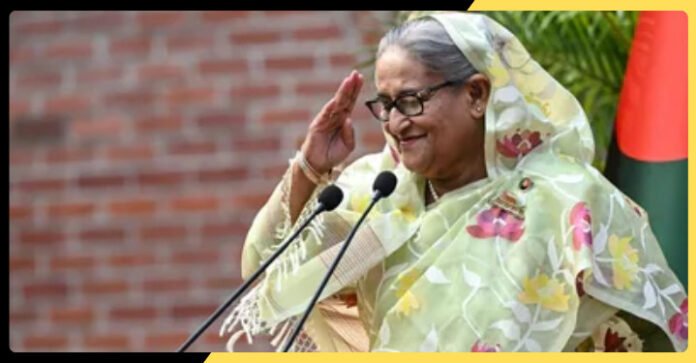

Bangladesh has formally sought clarification from India regarding reports that former Prime Minister Sheikh Hasina is expected to deliver a public speech during her stay in New Delhi. The development has added a fresh diplomatic dimension to the already sensitive relationship between the two neighboring countries, as Dhaka looks for assurances that Indian territory will not be used for political activities that could affect Bangladesh’s internal affairs.
According to diplomatic sources, Bangladesh’s interim administration conveyed its concerns through official channels after reports emerged that Hasina, who has been staying in India since leaving Bangladesh amid political unrest, was preparing to address supporters and members of the Bangladeshi diaspora from New Delhi. The request for clarification is not being viewed as a formal protest but rather as an attempt to understand India’s position on the matter before any public event takes place.
The issue comes at a time when Bangladesh is navigating a complex political transition. Since the change in government, relations between Dhaka and New Delhi have remained under close observation, with both countries emphasizing the importance of maintaining cooperation on trade, security, connectivity, and regional stability. However, Sheikh Hasina’s continued presence in India has remained a politically sensitive issue, attracting attention from both governments and international observers.
Bangladesh’s authorities are reportedly concerned that a speech by the former prime minister from Indian soil could be interpreted as political activity directed toward Bangladesh’s domestic audience. Officials believe such an event may influence the country’s political climate, especially at a time when tensions remain high following months of protests and political uncertainty.
India has not publicly confirmed whether Sheikh Hasina has been granted permission to hold any public event or make an official address. Indian officials have so far maintained that the matter is being handled through diplomatic channels and have refrained from commenting on media reports. New Delhi has consistently described Sheikh Hasina’s stay in India as a humanitarian arrangement while emphasizing its commitment to maintaining constructive relations with Bangladesh.
Diplomatic experts note that India traditionally avoids allowing foreign political leaders in exile or temporary residence to use its territory for activities that may directly interfere with another country’s internal political affairs. If Hasina’s planned speech is intended solely to address supporters without making political appeals, the situation may be viewed differently. However, the content and context of the address could become significant factors in determining its diplomatic implications.
The relationship between India and Bangladesh has historically been one of South Asia’s strongest bilateral partnerships. Cooperation has expanded across multiple sectors, including border management, infrastructure development, energy connectivity, defense cooperation, and trade. Both governments have repeatedly highlighted mutual trust as the foundation of the partnership, making any issue with political sensitivity particularly important to handle carefully.
Political analysts believe Bangladesh’s request for clarification reflects its desire to avoid misunderstandings before they develop into larger diplomatic disagreements. Rather than reacting after the speech takes place, Dhaka appears to be seeking transparency regarding India’s approach. Such diplomatic communication is common between neighboring countries, especially when issues involve former heads of government or politically influential figures.
Meanwhile, supporters of Sheikh Hasina argue that, as a political leader, she has the right to communicate with party members and supporters regardless of her location. Critics, however, contend that any address delivered from another country could complicate diplomatic relations and raise questions about neutrality.
Regional observers are closely monitoring the situation because of its broader implications for South Asian diplomacy. India has strategic interests in maintaining stability in Bangladesh, while Bangladesh remains an important partner in regional connectivity initiatives and security cooperation. Both governments have significant incentives to prevent this issue from escalating into a diplomatic dispute.
Foreign policy specialists suggest that quiet diplomatic engagement is likely to continue behind the scenes. Such discussions often remain confidential until both governments reach a mutual understanding or issue official statements clarifying their respective positions.
For now, neither India nor Bangladesh has announced any change in their diplomatic engagement, and there is no confirmation regarding the timing or format of Sheikh Hasina’s reported speech. As developments unfold, attention will remain focused on how both governments balance political sensitivities with their broader strategic partnership. The outcome is expected to serve as another important test of the resilience of India-Bangladesh relations during a period of political transition in the region.